DOE and Utilities – Working Together on IIJA
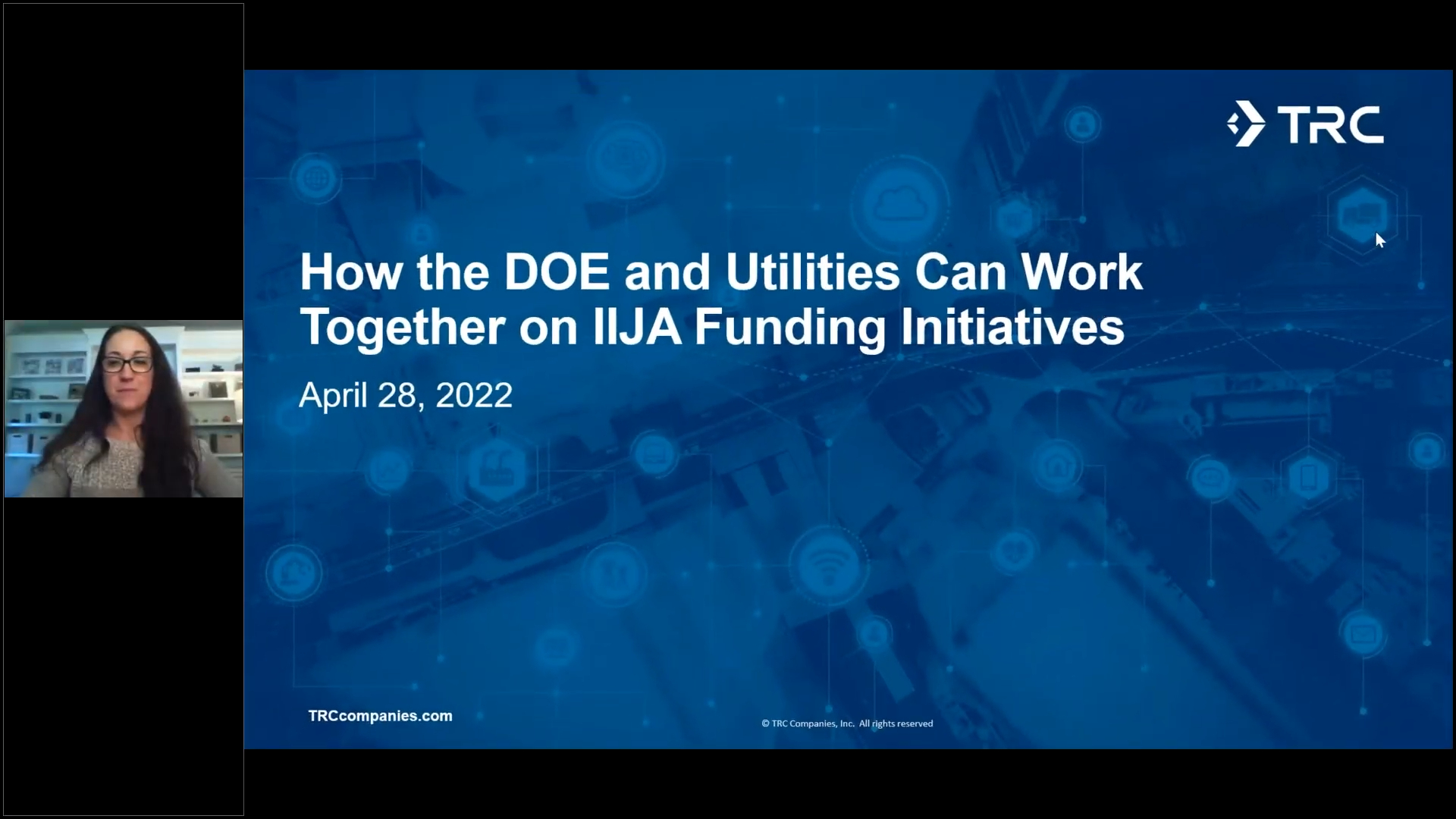
View our webinar replay of our IIJA funding initiatives webinar with Jigar Shah, Director of the Loan Programs Office – US Department of Energy

Helping develop future-facing programs that serve communities and customers with clean and equitable energy
Helping Customers Plan, Validate and Execute IIJA-Funded Projects
Nos praticiens partagent leurs idées et leurs points de vue sur les tendances et les défis qui façonnent le marché.
Produced and hosted by the staff of TRC’s Advanced Energy practice, the podcasts are a forum for current trends in the energy industry.
We’re excited to share Episode 8 of TRC’s Energy Talks Podcast, where we’re joined by experts from NEEA and Consumers Energy to explore the vital role of program evaluation in advancing energy efficiency and market transformation.
TRC examine l’environnement opérationnel unique et les meilleures pratiques pour les aéroports alors qu’ils font évoluer la recharge des VE, soutiennent l’électrification côté terre et côté piste et atteignent les objectifs de décarbonisation.
TRC peut maintenant fournir des audits énergétiques équivalents IAC aux petites et moyennes entreprises de fabrication (SMM), qui peuvent recevoir des subventions allant jusqu’à 300 000 $ pour la mise en œuvre des recommandations de vérification.
Apprenez à intégrer des pratiques de décarbonisation pour réduire votre contribution aux émissions de dioxyde de carbone. Travaillez à la durabilité avec nos solutions.
À la suite de sa discussion sur l’efficacité énergétique, Duane Baldwin, vice-président de l’énergie avancée de TRC, partage maintenant ses idées professionnelles et son engagement personnel envers l’équité énergétique.
Nous sommes heureux d’annoncer l’épisode 7 du podcast Energy Talks de TRC, où nous nous joignons à des experts des services publics et des fournisseurs de solutions de comptabilisation du carbone pour discuter de la façon dont notre industrie comprend, mesure et travaille à améliorer notre empreinte carbone collective.
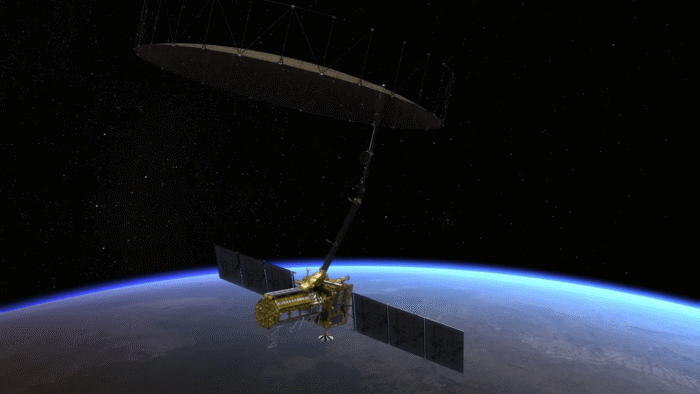
TRC analysera les données de la mission de la NASA pour aider à conserver l’eau potable et l’énergie en identifiant les fuites souterraines.
Pour s’attaquer aux inégalités et veiller à ce que les avantages de la transition vers l’énergie propre soient accessibles à tous, il faut examiner de près les processus auxquels on s’appuie depuis longtemps et qui peuvent avoir caché des inégalités enracinées en eux.
Écoutez l’épisode 6 du podcast Energy Talks de TRC, où nous nous joignons à des experts de l’industrie des marchés de gros de l’énergie et des produits environnementaux pour discuter de la façon dont les services publics et les développeurs de projets valorisent les attributs environnementaux des projets de décarbonisation des bâtiments.
Écoutez l’épisode 6 du podcast Energy Talks de TRC, où nous nous joignons à des experts de l’industrie des marchés de gros de l’énergie et des produits environnementaux pour discuter de la façon dont les services publics et les développeurs de projets valorisent les attributs environnementaux des projets de décarbonisation des bâtiments. Avec 40% des émissions de gaz à effet de serre provenant des bâtiments, ce secteur est le plus grand levier disponible pour nous de résoudre le changement climatique causé par les émissions. La décarbonisation des bâtiments fait référence à tout processus ou technologie qui réduit les émissions de dioxyde de carbone associées aux bâtiments. Cela comprend l’efficacité énergétique, l’électrification, la flexibilité de la charge et les projets de production d’énergie renouvelable distribuée. Les services publics investissent traditionnellement dans des programmes de décarbonisation des bâtiments pour obtenir des avantages du réseau, y compris une capacité évitée. Mais en parallèle, ces programmes génèrent des avantages environnementaux sous la forme d’émissions de gaz à effet de serre évitées – connues sous le nom d’attributs environnementaux – et peuvent aider à atteindre les objectifs du gouvernement et des entreprises en matière d’énergie propre. Il existe différents types d’attributs environnementaux, qui peuvent être mesurés en compensations de carbone (tonnes d’eCO2) ainsi que des certificats d’attributs énergétiques (CEE), généralement sous la forme de crédits d’énergie renouvelable ou de CER (mesurés en MWh). La valeur de ces avantages environnementaux augmente et devrait s’envoler au cours des prochaines décennies, ce qui fait du coût évité du carbone un intrant de plus en plus important dans l’évaluation de la rentabilité des programmes de décarbonisation des bâtiments. Cette tendance représente un changement de paradigme, offrant la possibilité d’attirer de nouveaux investisseurs importants dans notre industrie au cours des prochaines décennies et d’élargir considérablement les impacts de nos programmes. Beaucoup d’entre nous dans l’industrie se demandent : comment les services publics et les États qui administrent les programmes de décarbonisation des bâtiments évaluent-ils actuellement les attributs environnementaux générés par leurs programmes ?
La conservation de l’eau est essentielle pour réduire la consommation globale d’énergie et l’impact environnemental. Découvrez comment nos services peuvent vous aider à gérer votre conservation de l’eau.
L’élimination de l’utilisation du gaz naturel dans les nouvelles constructions est une option stratégique qui gagne à la fois du terrain et de la controverse
TRC received an award for advancing the transition to a clean-hydrogen, low-carbon economy by supporting the Appalachian Regional Clean Hydrogen Hub (ARCH2) consortium.
The need to decarbonize our energy systems is urgent – but to successfully transform this vast market requires cross-sector change at scale.
Heat pump technology is still evolving and real challenges exist to widespread market adoption.
Partnering With Local High Schools to Recruit the Next Generation of Clean Energy Workers.
Clean, community microgrids represent a promising and timely opportunity for you to advance your customer offering and deliver meaningful societal benefits, all while modernizing your grid and providing you with load flexibility.
Avec les procédures judiciaires, les appels devant les tribunaux et les actions politiques actuellement en cours, découvrez pourquoi certains États interdisent les nouveaux raccordements au gaz naturel dans certains secteurs dans le cadre des stratégies de décarbonisation et ce que cela signifie pour les consommateurs et les entrepreneurs. Alors que la décarbonisation devient impérative pour lutter contre les impacts du changement climatique à l’échelle nationale, le gouvernement fédéral, les États et les municipalités regardent au-delà du marché de la production d’électricité pour de nouvelles solutions qui peuvent faire une grande différence. Étant donné qu’une source importante d’émissions de carbone provient des combustibles fossiles utilisés dans les bâtiments, l’élimination de l’utilisation du gaz naturel dans les nouvelles constructions est une option politique qui gagne à la fois du terrain et de la controverse. La décarbonisation du secteur de la construction nécessite de réduire ou d’éliminer les émissions provenant des sources de pétrole ou de gaz naturel utilisées pour le chauffage et les foyers ornementaux, l’eau chaude domestique, le séchage des vêtements et la cuisson. Des chaudières aux chauffe-eau, en passant par les fournaises et les cuisinières à gaz, il existe de nombreuses façons dont une maison ou un autre bâtiment peut brûler des combustibles fossiles. L’élimination de ces sources et le remplacement de l’équipement par une nouvelle technologie électrique peuvent réduire la pollution de l’air extérieur, améliorer la qualité de l’air intérieur et améliorer l’environnement – aidant à atteindre les objectifs climatiques – mais cela peut également atténuer l’augmentation des coûts des services publics, protéger les options de logement abordable et s’attaquer aux impacts sur la sécurité, l’air intérieur et la santé humaine qui peuvent se produire avec la combustion de combustibles fossiles à l’intérieur. Alors que les États réglementent le gaz naturel dans les nouvelles constructions, de nombreux intervenants s’inquiètent de ce changement notable. Bien que cela ait conduit à des batailles juridiques et politiques litigieuses, la tendance est là pour rester. Et avec de nombreuses options de remplacement nouvelles et émergentes passionnantes pour les appareils au gaz naturel, combinées à des campagnes continues d’éducation et de sensibilisation des parties prenantes, il peut y avoir une voie positive pour la décarbonisation des bâtiments.
Lessons from TVA’s Non-Road EV (NREV) Program
For community leaders, rebuilding in the wake of disasters creates an opportunity to do more than simply replace homes with the fastest, least-expensive structures.
A significant portion of a building’s energy consumption is wasted through a combination of missing occupant needs and sub-optimal design and operation.
View our webinar replay of our IIJA funding initiatives webinar with Jigar Shah, Director of the Loan Programs Office – US Department of Energy.
As we plan for and make early investments for fleets, we’ll be paving the way for higher degrees of market penetration of passenger vehicles and other modes of transportation as well.
Find out how reach code initiatives are driving decarbonization with TRC. Our team offers decarbonization consulting and solutions. Turn To The Experts at TRC!
Carbon elimination of the magnitude needed to address climate change requires systems-level change that can only be reached by incremental, ground-up progress, building upon what we have achieved thus far.
There are compelling reasons to be optimistic about the outcomes of the COP26 meeting. Notably, agreement among all nations that more needs to be done, by both private and governmental bodies, to contain and mitigate climate change.
Most industry experts agree that weather aside, the global energy and gas markets are likely to remain uncertain with supply and market demand becoming tighter and more challenging to forecast.
All-Source Competitive Solicitations offer utilities an alternative to centralized planning, construction and dispatch of power supplies, helping to usher in a new era of market-driven technology innovation.
Pacific Gas and Electric Company (PG&E) formally announced TRC as the designated lead Program Implementer for the Statewide New Construction (SWNC) Residential All-Electric and Mixed Fuel Programs following a competitive solicitation process.
TRC, Slipstream, and the University of Minnesota are working with controls system manufacturers and contractors to develop such a standardized and streamlined building control retrofit process leveraging ASHRAE Guideline 36
Clean energy is a broad term with a fluctuating definition and a complicated lifecycle. We explore the issue, and hope to establish a more productive dialogue about our energy future.
Growing US Offshore Wind Industry Requires Reshoring of Materials and Supply Chain Optimization
NEW BRUNSWICK, NJ and LOWELL, MA. – Jan. 17, 2017 – TRC Companies Inc., a recognized leader in engineering, environmental consulting and construction-management services, today announced it has acquired the contract to serve as Program Administrator of New Jersey’s Clean Energy Program™ (NJCEP), which has provided more than $300 million annually in support to homeowners, businesses…
On October 28, the Camarillo City Council unanimously approved moving forward with the design of Hybrid Microgrids at five City facilities: City Hall, the Corporation Yard, Camarillo Public Library, Police Station, and Wastewater Treatment Plant. The microgrid at the Camarillo Public Library will be designed with solar+storage only, while the other four sites will employ a hybrid design of solar+storage+diesel.
Dominion Energy, one of the nation’s largest producers and transporters of energy, has partnered with TRC Digital to evaluate, implement and integrate technology to further the utility’s distributed energy goals. TRC Digital will facilitate Dominion Energy’s strategy development and technology execution, allowing Dominion Energy and its customers to accelerate the shift to distributed energy resources (DER) and net carbon reduction.
Together, TRC and Reactive combine TRC’s industry-leading power engineering expertise with Reactive’s machine learning software to provide utility teams with high-resolution frequency monitoring and automatic event analysis.
Myszka brings over 30 years of innovation, market development and operations experience to TRC.
COVID-19 and climate impacts are driving a focus on resilience and utilities are helping customers explore behind-the-meter (BTM) energy storage solutions they might not otherwise pursue.
TRC will help support MCE’s community and vulnerable customer resiliency efforts
Grid assets have evolved from traditional grid infrastructure to complex, and agile distributed energy systems today.
EE as a Resource programs that provide capacity and energy savings to the grid must be dependable and persistent to replace essential power plant capacity.
Commercial buildings today represent about 16% of energy use (30% of electricity) and a key source of GHG emissions across the US.
Implementing resilient solutions for many means ensuring power supply to critical facilities, emergency response efforts and local authorities during power outages.
As we look to spur strategic electrification across the US, it will be up energy providers and solution implementers to continue sharing ideas, insights and lessons learned
A place called home: Helping California families rebuild after wildfires
Oregon embarks on a bold initiative to reduce energy costs among low income residents with the help of TRC.
What will the grid of the future look like? Where are scientists and engineers breaking new ground to push energy efficiency even further? Join TRC at ACEEE Summer Study to find out.
TRC is proud to support Huntington, NY bolster power reliability and climate-change resiliency with a sophisticated new “community microgrid’’ combining solar energy, a fuel cell, biogas and traditional natural gas to deliver electricity and heat to local customers and institutions.
Supercharges its leading position in the Power & Energy sector.
Learn how AI, cloud, digital twins, AMI 2.0 and field mobility empower utilities to modernize resiliency and boost performance.
Discover how cloud-based solutions empower mid-sized utilities to overcome rising operational costs, manage rapid load growth and enhance customer engagement.
Discover how integrating ADMS and AMI empowers utilities with real-time data, smart analytics and grid optimization for reliability and regulatory compliance.
Discover how AMI 2.0 transforms utility operations and customer engagement with real-time data, advanced analytics and robust grid-edge innovation.
As extreme weather and wildfires become more prevalent, is it better to harden overhead systems or eliminate much of the risk through undergrounding?
Explore essential strategies for utilities to overcome challenges posed by massive, diverse data influx from smart meters, IoT and cloud platforms.
Explore how the Resiliency Bow Tie method helps utilities tackle rising outage risks from aging infrastructure, climate extremes and cyber threats. Learn how this strategic framework promotes effective risk mitigation, improves response times and fosters cross-functional collaboration, enabling utilities to deliver reliable service.
Produced and hosted by the staff of TRC’s Advanced Energy practice, the podcasts are a forum for current trends in the energy industry.
Discover how Lemur mobile mapping empowers utilities to improve data quality, streamline field operations and reduce costs. Lemur provides a unified, intuitive mobile solution that works online and offline, ensuring compliance and real-time decision-making.
Discover practical best practices to overcome common DERMS implementation challenges and ensure long-term utility success.
Explore how global energy market participants can reduce risk and improve forecasting through advanced analytics, integrated data strategies, and real-time insights.
Discover how modern 3D facility mapping empowers utilities to modernize infrastructure, improve asset management, and enable remote workflows with accurate digital twins, delivering cost savings and operational efficiency.
Discover how utilities can overcome common challenges and achieve true IT/OT integration by focusing on vision, alignment, change management, standardization, and scalable strategy.
Discover why now is the ideal time for utilities to deploy AMI 2.0, unlocking real-time data, operational efficiency and grid modernization benefits.
Discover how integrating enterprise systems empowers utilities to streamline operations, enhance grid reliability and deliver superior customer service.
In today’s changing energy landscape, grid resiliency is a top priority for all power system owners and operators. The ability to absorb disruptions and maintain power is crucial in an increasingly unpredictable world.
Implementing DERMS can come with challenges. By understanding the unique challenges related to DERMS and adopting the appropriate strategies to mitigate potential pitfalls, utilities can effectively integrate and coordinate DER deployment to align with regulatory commitments and broader business objectives.
Behavioral demand response (BDR) offers a cost-effective solution, reducing energy use during critical periods without requiring a dedicated DRMS.
In today’s rapidly evolving energy landscape, Independent System Operators (ISOs), Regional Transmission Organizations (RTOs) and utilities face unprecedented challenges in managing vast amounts of data.
Supercharges its leading position in the Power & Energy sector Milestone transaction: To welcome a U.S. premier Power & Energy brand of approximately 8,000 people to create the #1 Power & Energy platform in the U.S1 (total cash purchase price of US$3.3 billion). Highly accretive: Expected to be low- to mid-single digit percentage accretive to WSP’s adjusted net earnings per share2 and high-single digit percentage accretive once cost synergies are fully realized2,3 Highly complementary: To expand our offering in the Power & Energy sector and provide potential cross-selling opportunities similar to our POWER Engineers experience. Drives scale across strategic high-growth areas fueled by strong fundamentals: o Grows Advisory capabilities o Expands Program Management expertise o Adds to Digital offering with innovative solutions o Enhances service offering across Water, Infrastructure and Environment Elevates leading position in the U.S.: Combined with TRC, WSP will become the largest engineering and design firm in the U.S. by revenue4, with approximately 27,000 employees. Provides further diversification: 34% of U.S. net revenues to be derived from the Power & Energy sector.5 Accelerates WSP’s organic growth rate profile globally: Approximately two-thirds of WSP’s global net revenues to be derived from Canada and the Americas, and approximately 20% from Power & Energy—a double-digit organic growth rate sector.6 Fully aligned with WSP’s 2025-2027 Global Strategic Action Plan: Pioneering change for empowered growth. ~$850 million equity offering composed of $732 million bought deal and approximately $118 million concurrent private placement with La Caisse. NOT FOR RELEASE, PUBLICATION, OR DISTRIBUTION IN OR INTO THE UNITED STATES OF AMERICA OR TO ANY PERSON LOCATED OR RESIDENT IN THE UNITED STATES OF AMERICA, ITS TERRITORIES AND POSSESSIONS, ANY STATE OF THE UNITED STATES, OR THE DISTRICT OF COLUMBIA. BASE SHELF PROSPECTUS IS ACCESSIBLE, AND THE PROSPECTUS SUPPLEMENT WILL BE ACCESSIBLE WITHIN TWO BUSINESS DAYS, ON SEDAR+ MONTREAL, December 15, 2025 – WSP Global Inc. (TSX: WSP) (“WSP” or the “Corporation”), one of the world’s leading professional services firms, proudly announces it has entered into an agreement to acquire TRC Companies (“TRC”), a premier U.S. Power & Energy brand delivering end-to-end solutions that support the full infrastructure lifecycle (the “Acquisition”), currently majority-owned by funds managed by Warburg Pincus LLC. The proposed Acquisition, for a total cash purchase price of US$3.3 billion (approximately $4.5 billion based on the exchange rate of $1.3762 USD/CAD as of December 15, 2025), marks a significant step on WSP’s journey to achieve its 2025-2027 Global Strategic Action Plan. The proposed Acquisition will position WSP as the largest engineering and design firm in the U.S., supercharging its Power & Energy offering and enhancing its capabilities across Water, Infrastructure, and Environment. Based in Windsor, Connecticut, TRC has been a pioneer in adaptability and innovation for more than 55 years. TRC has established itself as a leader and recognized strategic advisor in the engineering and consulting industry, maintaining deep, long-term relationships with blue-chip utilities. Its team of approximately 8,000 employees offers an integrated approach that delivers long-term value for clients facing complex infrastructure and energy challenges. The proposed Acquisition complements WSP’s offering in attractive market sectors, will expand its client relationships, and enhance its capabilities throughout the project lifecycle, notably with a portfolio of advisory practices tailored to utilities and program management expertise. It will also create potential cross-selling opportunities across power engineering, environmental solutions, and advisory services. At the same time, TRC will bring a shared commitment to innovation and operational excellence, with investments in digital solutions and a highly skilled workforce—further amplifying WSP’s ability to deliver integrated, future-forward solutions. “The proposed Acquisition of TRC is a defining moment in the execution of WSP’s 2025-2027 Strategic Plan. Building on our track record of excellence and compounding financial performance, this strategic move will cement WSP as the Power & Energy consulting leader in the U.S. and globally. Joining forces will position our business for accelerated organic growth and create an integrated platform with industry-leading capabilities in advisory, engineering, and program management. With TRC’s highly complementary expertise in power delivery, transmission, distribution, and advisory services, our combined offering will cover the entire utility and infrastructure value chain. Together, we are poised to deliver more complex projects and offer expanded end-to-end services to help solve our clients’ critical needs, from aging infrastructure to grid modernization and electrification,” commented Alexandre L’Heureux, President and Chief Executive Officer of WSP. Also commenting on the Acquisition, Christopher P. Vincze, Chairman and Chief Executive Officer of TRC, said: “The joining of our two firms will create significant and exciting opportunities for our people, our clients and the communities in which we live and work. With TRC’s innovative, technology-oriented power business, underscored by an advanced use of digital, we will significantly strengthen WSP’s Power & Energy offering. Additionally, TRC’s globally recognized Environmental & Infrastructure business, which is the seed from which TRC grew, will enhance WSP’s capabilities across Water, Infrastructure and Environment. Our combined skill sets will elevate us to better support, over the next decade and beyond, our people and planet as we face unprecedented growth of power needs on the back of ongoing electrification, the re-emergence of domestic manufacturing in the U.S. and the continued growth of infrastructure. We were an early pioneer in the utility sector and continue to be a trusted thought partner, working to create, implement and manage complex strategies and programs to meet the country’s power needs. TRC’s people continue to be passionate about making the world a better place, and this next chapter will allow us to come together with WSP in a very exciting way to further that goal.” Reflecting on their investment, Kim Thomassin, Executive Vice President and Head of Québec at La Caisse said: “With this investment, La Caisse once again demonstrates its ongoing commitment to WSP, helping to position the company as a leader in engineering and design in the United States and globally, while accelerating the development of its Energy offering, a sector with strong potential. This transaction is at the core of our strategy to support the international expansion of companies firmly rooted in Québec and to give them the means to achieve sustainable growth.” FINANCIAL HIGHLIGHTS Proposed Acquisition of TRC for a total cash purchase price of US$3.3 billion approximately $4.5 billion based on the exchange rate of $3762 USD/CAD as of December 15, 2025). Acquisition price represents 14.5x TRC’s Pre-IFRS 16 CY2026E Adjusted EBITDA6 pre-synergies and 12.5x after including run-rate synergies.8 (TRC’s Pre-IFRS 16 Adjusted EBITDA and earnings before net interest and income tax for the financial year ended June 30, 2025 were approximately US$192.3 million ( $268.5 million) and US$87.5 million, respectively).Expected to be low-to-mid single-digit percentage accretive to WSP’s adjusted net earnings per share before synergies. WSP expects 2027 Accretion (as defined below) to be high single-digit percentage accretive once cost synergies are fully realized (WSP’s basic net earnings per share attributable to shareholders and adjusted net earnings per share were $5.40 and $8.05 respectively, for the financial year ended December 31, 2024).2,9 Expected cost synergies to exceed 3% of TRC’s net revenues for the financial year ended June 30, 20257, plus potential cross-selling revenue synergy opportunities in alignment with our POWER Engineers experience (TRC’s net revenues and revenues for the financial year ended June 30, 2025 were approximately US$1,192.2 million and US$1,498.9 million, respectively). Transaction to be financed with US$3.3 billion of Committed Acquisition Financing (as defined below). Estimated pro forma Net Debt to Adjusted EBITDA ratio6 of ~2.4x upon closing of the Acquisition with the expectation to return to below 2.0x within 12 months6 (WSP’s net debt to adjusted EBITDA ratio for the nine-month period ended September 27, 2025 was 1.4x and adjusted EBITDA and earnings before net financing expense and income taxes for the trailing twelve-month period ended September 27, 2025 were approximately $2,185.7 million and $1,481.0 million, respectively).8 Equity raise of approximately [$850] million: [$732] million bought deal public offering and approximately $[118] million private placement of common shares of WSP (“Common Shares”) expected to close on or about [December 22], 2025, with a corresponding reduction of the amounts drawn from the Committed Acquisition Financing. WSP may also opportunistically access debt capital markets to repay a further portion of the Committed Acquisition Financing should market conditions be favourable. WEBCAST WSP will host a webcast today at 4:45 p.m. (Eastern Daylight Time) to discuss the Acquisition. Exceptionally, there will be no question-and-answer session, given the concurrent equity offering. To join the webcast, please register at https://www.icastpro.ca/rp92yd or access https://www.wsp.com/en-gl/investors. A presentation of the Acquisition is accessible on the webcast platform and under the “Investors” section of WSP’s website. CONDITIONS TO THE ACQUISITION Subject to the satisfaction of certain customary closing conditions, including applicable regulatory approvals, the Acquisition is expected to be completed in the first quarter of 2026. ACQUISITION FINANCING Equity Financing The Equity Financing (as defined below) comprises: $[732] million bought deal public offering (the “Offering”) of common shares (the “Offering Common Shares”) at a price of $[•] per Offering Common Share (the “Offer Price”); and Approximately $[118] million private placement (the “Concurrent Private Placement” and together with the Offering, the “Equity Financing”) of common shares (the “Placement Common Shares”) at the Offer Price to Caisse de dépôt et placement du Québec (“La Caisse”) WSP intends to use the net proceeds from the Equity Financing to fund in part the purchase price payable in respect of the Acquisition (and related costs and expenses) and accordingly reduce amounts to be drawn on the closing of the Acquisition under the Committed Acquisition Financing to fund the purchase price for the Acquisition. Public Offering WSP has entered into an agreement with CIBC Capital Markets, BMO Capital Markets and National Bank Capital Markets (the “Joint Bookrunners”), on behalf of a syndicate of underwriters (the “Underwriters”), to issue and sell, on a “bought deal” basis, [•] Offering Common Shares at the Offer Price for gross proceeds to the Corporation of $[732] million. The Corporation has granted the Underwriters an over-allotment option (the “Over-Allotment Option”), exercisable in whole or in part, for a period of 30 days following the date of the closing of the Offering to purchase up to an additional number of Offering Common Shares equal to 15% of the Offering Common Shares to be sold pursuant to the Offering at the Offer Price to cover over-allotments, if any, and for market stabilization purposes. The Offering Common Shares distributed pursuant to the Offering will be offered in all provinces and territories of Canada pursuant to a prospectus supplement (the “Prospectus Supplement”) to the short form base shelf prospectus of WSP dated August 8, 2024 (the “Base Shelf Prospectus”) to be filed by WSP on or about December [17], 2025, as well as in the United States by way of private placement to “qualified institutional buyers” in reliance upon the exemption from registration provided by Rule 144A under the U.S. Securities Act of 1933, as amended (the “1933 Act”). The completion of the Offering is subject to the approval of the Toronto Stock Exchange (the “TSX”). Closing of the Offering is expected to occur on or about December [22], 2025 and is conditional upon the concurrent completion of the Concurrent Private Placement. No securities regulatory authority has either approved or disapproved the contents of this press release. The Offering Common Shares have not been, and will not be, registered under the 1933 Act, or any state securities laws. Accordingly, the Offering Common Shares may not be offered or sold within the United States unless registered under the 1933 Act and applicable state securities laws or pursuant to exemptions from the registration requirements of the 1933 Act and applicable state securities laws. This press release shall not constitute an offer to sell or the solicitation of an offer to buy securities in the United States, nor shall there be any sale of the Offering Common Shares in any jurisdiction in which such offer, solicitation or sale would be unlawful. Delivery of the Prospectus Supplement, and any amendments to the documents will be provided in accordance with securities legislation relating to procedures for providing access to a shelf prospectus supplement, and any amendment. The Prospectus Supplement will be (within two business days of the date hereof) accessible on SEDAR+ at www.sedarplus.ca. An electronic or paper copy of the Prospectus Supplement, and any amendment to the documents, may be obtained without charge from CIBC Capital Markets at 161 Bay Street, 5th Floor, Toronto, ON M5J 2S8 or by telephone at 1-416-956-6378 or by email at mailbox.Canadianprospectus@cibc.com by providing the contact with an email address or address, as applicable. The Prospectus Supplement contains important, detailed information about the Corporation and the proposed Offering. Prospective investors should read the Prospectus Supplement (when filed) before making an investment decision. Concurrent Private Placement Concurrently with this announcement, WSP has also entered into a subscription agreement pursuant to which the Corporation will complete the Concurrent Private Placement at the Offer Price with La Caisse for aggregate gross proceeds to the Corporation of approximately $[118] million. La Caisse has also been granted an option (the “Additional Subscription Option”) to purchase a number of additional Placement Common Shares representing up to [15]% of the number of Placement Common Shares subscribed by them on closing, subject to, and in the same proportion as the Over-Allotment Option being exercised by the Underwriters. The issuance of the Placement Common Shares under the Concurrent Private Placement is subject to the approval of the TSX. Closing of the Concurrent Private Placement is scheduled to occur concurrently with the closing of the Offering and is conditional upon the concurrent completion of the Offering. Assuming completion of the Concurrent Private Placement and the Offering, but not the exercise of the Over-Allotment Option or the Additional Subscription Option, La Caisse will beneficially own, or exercise control or direction over, directly or indirectly, an aggregate of [•] Common Shares representing approximately 13.9% of the then issued and outstanding Common Shares. The Placement Common Shares will be subject to a four month hold from the closing date of the Concurrent Private Placement. In accordance with the terms of the Subscription Agreement, the Placement Common Shares will also be subject to contractual lockups for a period of four (4) months following the date of issuance of such Placement Common Shares. La Caisse (or their respective designee) will be entitled to a capital commitment fee equal to 4% of the aggregate purchase price for the Placement Common Shares for which they have subscribed (and any additional Placement Common Shares they have subscribed pursuant to the Additional Subscription Option, as applicable). Committed Acquisition Financing Concurrently with the announcement of the Acquisition, Canadian Imperial Bank of Commerce and JP Morgan Chase Bank, N.A., acting as co-lead arrangers and joint bookrunners, provided commitments for US$3,300 million senior unsecured non-revolving term loans (collectively, the “Committed Acquisition Financing”). The Committed Acquisition Financing will be governed by an incremental facility supplement to the Corporation’s seventh amended and restated credit agreement dated as of April 27, 2023, as amended and supplemented from time to time, with a syndicate of financial institutions to be entered into on or before the closing of the Acquisition. All of the above elements of the Acquisition financing plan have been designed and structured with a view to preserving WSP’s investment grade rating. Related Party Transaction Matters La Caisse beneficially owns, or has control or direction over, directly or indirectly, Common Shares representing more than 10% of the issued and outstanding Common Shares of WSP. As a result of the foregoing, the Concurrent Private Placement is a “related party transaction” for the purposes of Multilateral Instrument 61-101 – Protection of minority security holders in special transactions (“MI 61-101”). The Corporation has relied on the exemptions from the valuation and minority approvals of MI 61-101 contained in paragraphs 5.5(a) and 5.7(a) of MI 61-101 on the basis that neither the fair market value of the Concurrent Private Placement (including the capital commitment fee payable thereunder), nor the consideration thereof, exceeds 25% of the market capitalization of the Corporation. FINANCIAL AND LEGAL ADVISORS JP Morgan and CIBC Capital Markets are acting as financial advisors to WSP on the Acquisition. Legal advice is being provided to WSP by Skadden, Arps, Slate, Meagher & Flom LLP in the United States and Stikeman Elliott LLP in Canada. Harris Williams, UBS Investment Bank, AEC Advisors, and Houlihan Lokey are acting as financial advisors to TRC on the Acquisition. Legal advice is being provided to TRC by Paul, Weiss, Rifkind, Wharton & Garrison LLP. About TRC TRC stands for adaptability. With direction setting perspectives and partnerships, our 8,000+ tested practitioners in advisory, consulting, construction, engineering and management services deliver unique resolutions that answer any built or natural imperative. By creating new pathways for the world to thrive, we help our clients adapt to change and achieve long-lasting results while solving the challenges of making the Earth a better place to live — community by community and project by project. TRC is ranked #17 on ENR’s list of the Top 500 Design Firms, #5 for Power and #3 for Transmission & Distribution. Learn more at TRCcompanies.com and follow us on LinkedIn. About La Caisse At La Caisse, formerly CDPQ, we have invested for 60 years with a dual mandate: generate optimal long term returns for our 48 depositors, who represent over 6 million Quebecers, and contribute to Québec’s economic development. As a global investment group, we are active in the major financial markets, private equity, infrastructure, real estate and private credit. As at June 30, 2025, La Caisse’s net assets totalled CAD 496 billion. For more information, visit lacaisse.com or consult our LinkedIn or Instagram pages. La Caisse is a registered trademark of Caisse de dépôt et placement du Québec that is protected in Canada and other jurisdictions and licensed for use by its subsidiaries. About WSP WSP is one of the world’s leading professional services firms, uniting its engineering, advisory and science-based expertise to shape communities to advance humanity. From local beginnings to a globe-spanning presence today, WSP operates in over 50 countries and employs approximately 75,000 professionals, known as Visioneers. Together they pioneer solutions and deliver innovative projects in the transportation, infrastructure, environment, building, energy, water, and mining and metals sectors. WSP is publicly listed on the Toronto Stock Exchange (TSX:WSP). FORWARD-LOOKING STATEMENTS Certain information contained herein is not based on historical facts and may constitute forward-looking statements or forward-looking information under Canadian securities laws (collectively, “forward-looking statements”). Forward-looking statements may include estimates, plans, strategic ambitions, objectives, expectations, opinions, forecasts, projections, guidance, outlook, expectations regarding the requirements of various end markets, demand for and investments in power and energy related services and infrastructure, trends or other statements that are not statements of fact. Forward-looking statements made by the Corporation in this document may include statements about the Acquisition, the benefits, synergies and opportunities of the Acquisition, the Offering and the Concurrent Private Placement and the use of proceeds therefrom; the closing of the Offering and the Concurrent Private Placement; the conditions precedent to the closing of the Acquisition; the expected closing date of the Acquisition; the Committed Acquisition Financing, available liquidities, the attractiveness of the Acquisition from a financial perspective and expected accretion in various financial metrics (including estimated 2027 Accretion, Accretion Upon Closing of the Acquisition, TRC Pre-IFRS 16 Adjusted EBITDA and WSP’s Pro Forma Net Debt to Adjusted EBITDA ratio upon closing of the Acquisition and within 12 months following closing of the Acquisition); expectations regarding anticipated cost savings and synergies; the strength, complementarity and compatibility of TRC’s business with WSP’s existing business and teams; other anticipated benefits of the Acquisition and their expected impact on WSP’s delivery of its strategic plan and its long-term vision, future growth, results of operations, financial performance, business, prospects and opportunities, WSP’s business outlook, objectives, development, plans, integration, growth strategies and other strategic priorities, and WSP’s leadership position in its markets; and statements relating to WSP’s future growth, results of operations, performance business, prospects and opportunities, the expected synergies to be realized and certain expected financial ratios and other statements that are not historical facts. Forward-looking statements can typically be identified by terminology such as “may,” “will,” “should,” “expect,” “plan,” “anticipate,” “believe,” “estimate,” “predict,” “forecast,” “project,” “intend,” “target,” “potential,” “continue” or the negative of these terms or terminology of a similar nature. Such forward-looking statements reflect current beliefs of Management and are based on certain factors and assumptions, which by their nature are subject to inherent risks and uncertainties. While the Corporation considers these factors and assumptions to be reasonable based on information available as at the date hereof, actual events or results could differ materially from the results, predictions, forecasts, conclusions or projections expressed or implied in the forward-looking statements. Forward-looking statements made by WSP are based on a number of assumptions believed by WSP to be reasonable as at the date hereof, including assumptions set out through this document and including, without limitation, principal assumptions about the satisfaction of all closing conditions and the successful completion of the Offering and the Concurrent Private Placement within the anticipated timeframe; the expected timing of completion of the Acquisition and the conditions precedent to the closing of the Acquisition (including the receipt of regulatory approvals); WSP’s ability to retain and attract new business, achieve synergies and maintain market position arising from successful integration plans relating to the Acquisition; WSP’s ability to otherwise complete the integration of TRC within anticipated time periods and at expected cost levels; WSP’s ability to attract and retain key employees in connection with the Acquisition; Management’s estimates and expectations in relation to future economic and business conditions and other factors in relation to the Acquisition and resulting impact on growth and accretion in various financial metrics; Management’s expectations in relation to the future performance and economic conditions and other factors in relation to TRC; the realization of the expected strategic, financial and other benefits of the Acquisition in the timeframe anticipated; the accuracy and completeness of the information (including financial information) provided by TRC and publicly available information; the absence of significant undisclosed costs or liabilities associated with the Acquisition; general economic and political conditions; organic growth expectations; economic and market assumptions regarding competition; the state of the global economy and the economies of the regions in which WSP or TRC operates; the state of and access to global and local capital and credit markets; interest rates; working capital requirements; the collection of accounts receivable; WSP obtaining new contract awards; the type of contracts entered into by WSP; the anticipated margins under new contract awards; the adequate utilization of WSP’s workforce; the ability of WSP to attract new clients; the ability of WSP to retain current clients; changes in contract performance; project delivery; WSP’s competitors; the ability of the Corporation to successfully integrate businesses; the acquisition and integration of businesses in the future; WSP’s ability to manage growth; external factors affecting the global operations of WSP; the state of WSP’s backlog and pipeline of opportunities in various reportable segments; the joint arrangements into which WSP has entered or will enter; capital investments made by the public and private sectors; relationships with suppliers and subconsultants; relationships with management, key professionals and other employees of WSP; the maintenance of sufficient insurance; the management of environmental, social and health and safety risks; the sufficiency of the WSP’s current and planned information systems, communications technology and other technology; the sufficiency of the Corporation’s cybersecurity measures; compliance with laws and regulations; future legal proceedings; the sufficiency of internal and disclosure controls; the regulatory environment; impairment of goodwill; foreign currency fluctuation; the expected benefits of acquisitions and the expected synergies to be realized as a result thereof; the tax legislation and regulations to which WSP is subject and the state of WSP’s benefit plans, as well as the assumptions underlying the 2025 financial outlook set out in WSP’s press releases dated February 12, 2025, August 6, 2025 and November 5, 2025. If any of these assumptions prove to be inaccurate, WSP’s actual results could differ materially from those expressed or implied in forward-looking statements. In evaluating these forward-looking statements, investors should specifically consider various risk factors, which, if realized, could cause WSP’s actual results or events to differ materially from those expressed or implied in forward-looking statements. Such risk factors include, but are not limited to: risks and uncertainties relating to the dilutive effect of the Offering on holders of Common Shares; the fact that the declaration of dividends on the Common Shares is at the discretion of the board of directors of WSP; the fact that the price at which the Common Shares under the Offering are sold by the Underwriters may be less than the Offering Price; WSP’s inability to successfully integrate TRC’s business upon completion of the Acquisition; the possible delay or failure to close the Acquisition; the potential failure to realize anticipated benefits from the Acquisition; the potential failure to obtain regulatory approvals in a timely manner, or at all; the currency exchange risk and foreign currency exposure related to the purchase price payable in respect of the Acquisition; WSP’s reliance upon publicly available information and information provided by TRC in connection with, and for the purposes of, the Acquisition; risks associated with historical and pro forma financial information; potential undisclosed costs or liabilities associated with the Acquisition; WSP’s or TRC’s businesses being adversely impacted during the pendency of the Acquisition; and change of control and other similar provisions and fees, as well as other risk factors discussed in greater detail in section 20, “Risk Factors,” of WSP’s Management Discussion and Analysis for the fourth quarter and year ended December 31, 2024 and in section 17, “Risk Factors,” of WSP’s Management Discussion and Analysis for the third quarter and nine-month period ended September 27, 2025, and as may be supplemented from time to time in reports filed by the Corporation with securities regulators or securities commissions or other documents that the Corporation makes public, which are available on SEDAR+ at www.sedarplus.ca and which sections are incorporated herein by reference into this cautionary statement. Although we have attempted to identify important risk factors that could cause actual results or events to differ materially from those contained in forward-looking statements, there may be other risk factors not presently known to us or that we presently believe are not material that could also cause actual results or future events to differ materially from those expressed in such forward-looking statements. WSP cautions that the foregoing list of risk factors is not exhaustive and other unknown or unpredictable factors could have also a material adverse effect on the performance or results of WSP or TRC. Actual results and events may be significantly different from what we currently expect because of the risks associated with our business, industry and global economy and of the assumptions made in relation to these risks. As such, there can be no assurance that actual results will be consistent with forward-looking statements. The completion of the Acquisition is subject to customary closing conditions, termination rights and other risks and uncertainties, including, without limitation and as applicable, regulatory approvals, and there can be no assurance that the Acquisition will be completed. There can also be no assurance that if the Acquisition is completed, the strategic and financial benefits expected to result from the Acquisition will be realized. To the extent any forward-looking statement in this document constitutes financial outlook or future-oriented financial information within the meaning of applicable Canadian securities laws, such information is intended to provide investors with information regarding the Corporation, including the Corporation’s assessment of future financial plans, and may not be appropriate for other purposes. Financial outlook (including assumptions about future events, including economic conditions and proposed courses of action, based on the Corporation’s assessment of the relevant information currently available), as with forward-looking statements generally, is based on current estimates, expectations and assumptions and is subject to inherent risks and uncertainties and other factors. Any financial outlook or future oriented financial information included in this document has been prepared by, and is the responsibility of, Management. PricewaterhouseCoopers LLP, the independent auditor of the Corporation, has not audited, reviewed, examined, compiled nor applied agreed-upon procedures with respect to any such financial outlook or future-oriented financial information and, accordingly, PricewaterhouseCoopers LLP does not express an opinion with respect thereto. The PricewaterhouseCoopers LLP report incorporated by reference in the Prospectus Supplement relates to the Corporation’s previously issued financial statements for the financial year ended December 31, 2024. It does not extend to any financial outlook or future-oriented financial information and should not be read to do so. Differences could arise because of events announced or completed after the date of this press release. All of the forward-looking statements contained in this document are expressly qualified in their entirety by this cautionary statement. The forward-looking statements contained in this document are made as of the date hereof (unless otherwise specified) and, accordingly, are subject to change after such date. Except to the extent required by applicable law, WSP does not assume any obligation to publicly update or to revise any forward-looking statements made in this document or otherwise, whether as a result of new information, future events, or otherwise. Readers should not place undue reliance on forward-looking statements. Readers are also referred to cautionary language regarding forward-looking statements included in the Prospectus Supplement. Additional Underlying Assumptions The Corporation cautions that the assumptions used to prepare the estimated 2027 Accretion, Accretion Upon Closing of the Acquisition, TRC Pre-IFRS 16 Adjusted EBITDA, TRC Post-IFRS 16 Adjusted EBITDA, and WSP’s Pro Forma Net Debt to Adjusted EBITDA ratio upon closing of the Acquisition and within 12 months following closing of the Acquisition could prove to be incorrect or inaccurate. Accordingly, the actual results could differ materially from the Corporation’s expectations as set out in this press release. The Corporation considered numerous economic and market assumptions regarding the foreign exchange rate, competition, political environment, and economic performance of each region where the Corporation and TRC operate. In addition to the assumptions disclosed above under “Forward-Looking Statements”, the following assumptions were used to develop these forward-looking financial measures: 2027 Accretion: WSP’s net revenue organic growth of approximately the same level as the average of the last three years for each of the years until 2027 (WSP’s revenue and net revenue were $16,166.8 million and $12,172.2 million, respectively, for the financial year ended December 31, 2024); TRC’s net revenue organic growth in line with the last 4-year compound annual growth rate (“CAGR”) revenue growth (TRC revenue and net revenue were approximately US$1,498.9 million and US$1,192.2 million, respectively for the financial year ended June 30, 2025); TRC Pre-IFRS 16 Adjusted EBITDA margin and Post-IFRS 16 Adjusted EBITDA margin expansion supported by a combination of levers, including utilization and pricing, where significant opportunity has been identified; Expected cost synergies of the Acquisition being fully realized by the end of 2027, with 50% expected to be realized in the first 12 months after closing of the Acquisition. Accretion Upon Closing of the Acquisition: The Acquisition is expected to be immediately accretive upon closing, excluding synergies. WSP’s net revenue organic growth of approximately the same level as the average of the last three years for each of the years until 2027 (WSP’s revenue and net revenue were $16,166.8 million and $12,172.2 million, respectively, for the financial year ended December 31, 2024); TRC’s net revenue organic growth in line with the last 4-year compound annual growth rate (“CAGR”) revenue growth (TRC revenue and net revenue were approximately US$1,498.9 million and US$1,192.2 million, respectively for the financial year ended June 30, 2025); TRC Pre-IFRS 16 Adjusted EBITDA margin and Post-IFRS 16 Adjusted EBITDA margin expansion supported by a combination of levers, including utilization and pricing, where significant opportunity has been identified. TRC Pre-IFRS-16 Adjusted EBITDA and TRC Post-IFRS 16 Adjusted EBITDA: TRC high single digit revenue organic growth for the financial year ending December 31, 2026, in line with TRC’s actual performance for the last four years. TRC Pre-IFRS 16 Adjusted EBITDA margin and Post-IFRS 16 Adjusted EBITDA margin expansion supported by a combination of levers, including utilization and pricing, where significant opportunity has been identified; WSP’s Pro Forma Net Debt to Adjusted EBITDA ratio (upon closing of the Acquisition, and a targeted range within 12 months following closing of the Acquisition): Acquisition closing date assumed to be March 28, 2026; WSP’s Adjusted EBITDA2 for the financial year ending December 31, 2025 ranging from $2.54 billion to $2.56 billion10; TRC’s Post-IFRS 16 Adjusted EBITDA for the financial year ending June 30, 2026 being in line with TRC’s actual performance of the first 3 months of the financial year ending June 30, 2026; All elements of WSP’s consolidated statements of cash flows for the applicable period being in line with those generally experienced by WSP in comparable periods; WSP’s net revenue between $13.8 billion and $14.0 billion for the financial year ending December 31, 2025 (WSP’s net revenue was $12,172.2 million for the financial year ended December 31, 2024, and WSP’s revenue was $16,166.8 million for the financial year ended December 31, 2024); and Cash flow of TRC for the financial year ending June 30, 2026 being in line with TRC Pre-IFRS 16 Adjusted EBITDA for the first 3 months of the financial year ending June 30, 2026. NON-IFRS AND OTHER FINANCIAL MEASURES The Corporation reports its financial results in accordance with International Accounting Standard 34 Interim Financial Reporting. WSP uses a number of financial measures when assessing its results and measuring overall performance. Some of these financial measures are not calculated in accordance with International Financial Reporting Standards Accounting Standards (« IFRS »). Regulation 52-112 respecting Non-GAAP and Other Financial Measures Disclosure prescribes disclosure requirements that apply to the following types of measures used by the Corporation: (i) non-IFRS financial measures; (ii) non-IFRS ratios; (iii) total of segments measures; (iv) capital management measures; and (v) supplementary financial measures. In this document, the following non-IFRS and other financial measures may be used by the Corporation: 2027 Accretion; Accretion Upon Closing of the Acquisition; Net Revenues; Net Revenue Organic Growth, Adjusted EBITDA; Adjusted Net Earnings; Adjusted Net Earnings Per hare; and Net Debt to Adjusted EBITDA ratio. Other than in respect of 2027 Accretion and Accretion Upon Closing of the Acquisition which are each defined below, explanations of the composition and usefulness of these measures can be found in section 19, “Glossary of segment reporting measures, non-IFRS and other financial measures” of WSP’s MD&A for the third quarter and nine-month period ended September 27, 2025 (the “Q3 2025 MD&A”), which section is incorporated by reference in this document, as posted on WSP’s website at www.wsp.com, and filed on SEDAR+ at www.sedarplus.ca. Reconciliations of such measures to the most directly comparable measure under IFRS are provided in section 8, “Financial Review” and section 9, “Liquidity” in each of WSP’s MD&A for the second quarter and six-month period ended June 29, 2024, WSP’s MD&A for the third quarter and nine-month period ended September 28, 2024, WSP’s MD&A for the fourth quarter and year ended December 31, 2024 (the “2024 MD&A”), WSP’s MD&A for the second quarter and six-month period ended June 28, 2025 and in the Q3 2025 MD&A, which sections are also incorporated by reference in this document, as posted on WSP’s website at www.wsp.com, and filed on SEDAR+ at www.sedarplus.ca. The information in this document also includes non-U.S. GAAP financial measures and non-U.S. GAAP financial ratios with respect to TRC, namely TRC Net Revenues, TRC Pre-IFRS 16 Adjusted EBITDA, TRC Post-IFRS 16 Adjusted EBITDA, TRC Pre-IFRS 16 Adjusted EBITDA margin and TRC Post-IFRS 16 Adjusted EBITDA margin. These measures are not recognized measures under U.S. GAAP and do not have standardized meanings prescribed by U.S. GAAP and therefore may not be comparable to similar measures presented by other companies, including WSP’s. Rather, these measures are provided as additional information to complement U.S. GAAP measures by providing further understanding of TRC’s results of operations. Accordingly, these measures should not be considered in isolation nor as a substitute for analysis of TRC’s financial statements reported under U.S. GAAP. WSP discloses TRC Pre-IFRS 16 Adjusted EBITDA because this non-U.S. GAAP measure is a key measure used by TRC to evaluate its business, measure its operating performance and make strategic decisions. WSP believes TRC Pre-IFRS 16 Adjusted EBITDA is useful for investors and others in understanding and evaluating its operations results in the same manner as TRC. However, TRC Pre-IFRS 16 Adjusted EBITDA is not a financial measure calculated in accordance with U.S. GAAP and should not be considered as a substitute for net income, income before income taxes, or any other operating performance measure calculated in accordance with U.S. GAAP. Using this non-U.S. GAAP financial measure to analyze TRC’s business would have material limitations because the calculations are based on the subjective determination of Management regarding the nature and classification of events and circumstances that investors may find significant. In addition, although other companies in its industry may report measures titled adjusted EBITDA or similar measures, such non-U.S. GAAP financial measures may be calculated differently from how TRC calculates non-U.S. GAAP financial measures, which reduces their overall usefulness as comparative measures. Because of these limitations, you should consider these non-U.S. GAAP financial measures alongside other financial performance measures, including net income and TRC’s other financial results presented in accordance with U.S. GAAP. These measures are defined as follows: “TRC Net Revenues” has the same definition as WSP’s definition of “net revenues,” being revenues less direct costs for subconsultants and other direct expenses that are recoverable directly from clients. “TRC Pre-IFRS 16 Adjusted EBITDA” is defined as TRC earnings before net interest and income taxes, excluding depreciation, amortization and acquisition and integration expenses and unusual items. “TRC Post-IFRS 16 Adjusted EBITDA” is defined as the TRC Pre-IFRS 16 Adjusted EBITDA adjusted for operating lease costs. “TRC Pre-IFRS 16 Adjusted EBITDA margin” is defined as the TRC Pre-IFRS 16 Adjusted EBITDA, divided by TRC Net Revenues. “TRC Post-IFRS 16 Adjusted EBITDA margin” is defined as the TRC Post-IFRS 16 Adjusted EBITDA, divided by TRC Net Revenues. WSP uses the following non-IFRS and other financial measures in this document with respect to the Corporation, in each case on a pro-forma basis after giving effect to the Acquisition, the Offering, the Concurrent Private Placement, advances and funds expected to be drawn under the Committed Acquisition Financing and any Acquisition related adjustments, as if each had been completed at the beginning of the relevant period: “WSP Pro Forma Adjusted EBITDA,” for the purpose of calculating the WSP Pro Forma Net Debt to Adjusted EBITDA ratio; “WSP Pro Forma Net Debt to Adjusted EBITDA ratio”; and “WSP Pro Forma Net Revenues”. “2027 Accretion” or “accretive” is calculated as the increase in WSP’s forecasted pro forma adjusted net earnings per share for the financial year ending December 31, 2027 after giving effect to the Acquisition, the Offering, the Concurrent Private Placement, advances and funds expected to be drawn under the Committed Acquisition Financing and any Acquisition-related adjustments, as if it had been completed on January 1, 2027, as compared to WSP’s forecasted adjusted net earnings per share for the financial year ending December 31, 2027 on a stand-alone basis. Refer to “Additional Underlying Assumptions” in this document. “Accretion Upon Closing of the Acquisition” is calculated as the increase in WSP’s forecasted pro forma adjusted net earnings per share immediately after giving effect to the Acquisition, the Offering, the Concurrent Private Placement, advances and funds expected to be drawn under the Committed Acquisition Financing and any Acquisition-related adjustments, as compared to WSP’s forecasted adjusted net earnings per share on a stand-alone basis. Refer to “Additional Underlying Assumptions” in this document. A reconciliation of TRC earnings before net interest and income tax to TRC Pre-IFRS 16 Adjusted EBITDA and TRC Post-IFRS 16 Adjusted EBITDA for the financial year ended June 30, 2025, is provided in the table below: Financial year ended June 30,2025 (in million U.S. dollars) Earnings before net interest and income taxes 87.5 Depreciation 13.8 Amortization 73.1 Acquisition and integration expenses and unusual items 17.9 TRC Pre-IFRS 16 Adjusted EBITDA 192.3 Operating lease costs (IFRS 16 Adjustment) 14.9 TRC Post-IFRS 16 Adjusted EBITDA11 207.2 A reconciliation of TRC Revenues to TRC Net Revenues for the financial year ended June 30, 2025, is provided in the table below: Financial year ended June 30,2025 (in million U.S. dollars) Revenues 1,498.9 Subconsultants and direct costs (306.7) TRC Net Revenues12 1,192.2 A reconciliation of WSP’s Pro Forma Net Revenues for the trailing twelve months ended September 27, 2025 for WSP and financial year ended June 30, 2025 for TRC, is provided in the table below: Trailing Twelve months ended September 27, 2025 (in million U.S. dollars) WSP Net revenues* 13,680.4 TRC Net Revenues (for the financial year ended June 30, 2025 and converted into Canadian dollars) 1,663.4 WSP Pro Forma Net Revenues 15,343.8 * Total of segments measure A reconciliation of WSP’s Pro Forma Adjusted EBITDA for the trailing twelve months ended June 28, 2025 for WSP and financial year ended June 30, 2025 for TRC, is provided in the table below: Trailing Twelve months ended September 27, 2025 (in million U.S. dollars) WSP Adjusted EBITDA 2,501.4 TRC Post-IFRS 16 Adjusted EBITDA (for the financial year ended June 30, 2025 and converted into Canadian dollars) 289.2 WSP Pro Forma Adjusted EBITDA 2,790.6 A reconciliation of WSP’s Pro Forma Net Revenues for the trailing twelve months ended June 28, 2025 for WSP and financial year ended June 30, 2025 for TRC, is provided in the table below: Trailing Twelve months ended June 28, 2025 (in million U.S. dollars) WSP Net revenues* 13,214.2 TRC Net revenues (for the financial year ended June 30, 2025 and converted into Canadian dollars) 1,663.4 WSP Pro Forma Net Revenues 14,877.6 * *Total of segments measure A reconciliation of WSP’s Pro Forma Adjusted EBITDA for the trailing twelve months ended June 28, 2025 for WSP and financial year ended June 30, 2025 for TRC, is provided in the table below: Trailing Twelve months ended June 28, 2025 (in million U.S. dollars) WSP Adjusted EBITDA 2,386.4 TRC Post-IFRS 16 Adjusted EBITDA (for the financial year ended June 30, 2025 and converted into Canadian dollars) 289.2 WSP Pro Forma Adjusted EBITDA 2,675.6 The non-IFRS and other financial measures used in this document do not have a standardized meaning as prescribed by IFRS. Management of the Corporation believes that these non-IFRS and other financial measures provide useful information to investors regarding the financial condition and results of operations of the Corporation and the other entities referenced herein as they provide additional key metrics of their performance. Refer to section 19 “Glossary of segment reporting, non-IFRS and other financial measures” of the Q3 2025 MD&A for more information on the usefulness to investors of each such measures. These non-IFRS and other financial measures are not recognized under IFRS, do not have any standardized meanings prescribed under IFRS and may differ from similar computations as reported by other issuers, and accordingly may not be comparable. These measures should not be viewed as a substitute for the related financial information prepared in accordance with IFRS. PRESENTATION OF FINANCIAL INFORMATION Unless otherwise indicated, all references to “$” in this document are to Canadian dollars and all references to “US$” refer to United States dollars. Where financial information of TRC has been converted from U.S. dollars to Canadian dollars for purposes of comparison to and combination with, financial information of WSP, U.S. dollars have been converted to Canadian dollars at an exchange rate of $1.3952 Canadian dollars per US$1.00. TRC’s financial statements were prepared in accordance with U.S. generally accepted accounting principles (“U.S. GAAP”). IFRS differs in certain material respects from U.S. GAAP. The financial information of TRC presented in this document has not been adjusted to give effect to the differences between U.S. GAAP and IFRS or to accounting policies that comply with IFRS and as applied by WSP, nor has such financial information been conformed from accounting principles under U.S. GAAP to IFRS as issued by the IASB, and thus may not be directly comparable to WSP’s financial information prepared in accordance with IFRS. We have assessed the differences between U.S. GAAP and IFRS for TRC and have determined the impact to be immaterial except for Lease Accounting. Under IFRS, Lease Accounting is governed by IFRS 16 while under U.S. GAAP, it is governed by Accounting Standard Codification (ASC) 842. While similar with regards to the recognition of leases on the balance sheet, the standards have many differences in application. However, the impact of the differences between U.S. GAAP and IFRS for Lease Accounting on the pro forma financial measures presented in this document, namely WSP Pro Forma Net Revenue and WSP Pro Forma Adjusted EBITDA, is immaterial, such that no adjustments would be necessary. WSP’s financial information for the trailing 12-month period ended June 28, 2025 presented herein has been derived by adding WSP’s unaudited interim consolidated financial information for the six-month period ended June 28, 2025 to its audited consolidated financial information for the financial year ended December 31, 2024, and subtracting its unaudited interim consolidated financial information for the six-month period ended June 29, 2024. WSP’s financial information for the trailing 12-month period ended September 27, 2025, presented herein has been derived by adding WSP’s unaudited interim consolidated financial information for the nine-month period ended September 27, 2025 to its audited consolidated financial information for financial year ended December 31, 2024, and subtracting its unaudited interim consolidated financial information for the nine-month period ended September 28, 2024. NO OFFER OR SOLICITATION No securities regulatory authority has either approved or disapproved the contents of this press release. For more information, please contact: Alain Michaud Chief Financial Officer WSP Global Inc. alain.michaud@wsp.com (438) 843-731 1 Based on Engineering News-Record’s (ENR) Top 20 U.S. Design Firms by Sector (Power) list in August 2025, calculated on U.S. domestic revenues (U.S. Revenues) and adjusted to reflect annualization of POWER Engineers, Incorporated’s contribution for the financial year ended December 31, 2024, the assumed completion of the Acquisition as well as WSP U.S. Pro Forma Revenues. The approximate number of employees is as at December 2, 2025. 2 Non-IFRS financial measure or non-IFRS financial ratio that is forward-looking, without a standardized definition under IFRS, which may not be comparable to similar measures or ratios used by other issuers. Please refer to the “Non-IFRS and Other Financial Measures” and « Forward-Looking Statements » disclaimers below. For the financial year ended December 31, 2024, WSP’s adjusted EBITDA was $2,185.7 million, basic net earnings per share attributable to shareholders was $5.40 and adjusted net earnings per share was $8.05. 3 Cost synergies to exceed 3% of TRC’s net revenue are expected to be achieved by the end of 2027, with 50% expected to be realized in the first 12 months after closing of the Acquisition. The cost to realize synergies is estimated at the same level of synergies. 4 Based on ENR’s Top 500 U.S. Design Firms list in August 2025, calculated on U.S. Revenues and adjusted to reflect annualization of POWER Engineers’ contribution for the financial year ended December 31, 2024, the assumed completion of the Acquisition as well as WSP U.S. Pro Forma Revenues. Please refer to the « Forward-Looking Statements » disclaimer below. 5 Based on WSP U.S.’s Power and Energy net revenues for the trailing twelve-month (TTM) period ended June 28, 2025, and TRC’s Power and Energy net revenues for the financial year ended June 30, 2025. USD/CAD exchange rate used to convert TRC net revenue Power and Energy sector into Canadian dollars is 1.3952. Please refer to the “Non-IFRS and Other Financial Measures” and « Forward-Looking Statements » disclaimers below. 6 Pro forma Net Revenues are for the trailing twelve-month period ended June 28, 2025 for WSP, adjusted to reflect annualization of POWER Engineers’ contribution for the financial year ended December 31, 2024 and the assumed completion of the Acquisition. Please refer to the « Forward-Looking Statements » disclaimer below. 7 Non-IFRS financial measure or non-IFRS ratio that is forward-looking, without a standardized definition under IFRS, which may not be comparable to similar measures or ratios used by other issuers. Please refer to the “Non-IFRS and Other Financial Measures” and « Forward-Looking Statements » disclaimers below. 8 Cost synergies to exceed 3% of TRC’s net revenue for the financial year ended June 30, 2025 are expected to be achieved by the end of 2027, with 50% expected to be realized in the first 12 months after closing of the Acquisition. The cost to realize synergies is estimated at the same level of synergies. 9 The Corporation’s assessment of potential synergy opportunities for the Acquisition is primarily based on the information received as part of its due diligence investigation of TRC, its own outside-in perspectives, previous acquisition experience and publicly available information. 10 The target ranges were prepared assuming no fluctuations in foreign exchange rates in markets in which the Corporation operates. The Corporation anticipates organic growth in net revenues by segment will be in the mid-to-high single digits in its Canadian operations, mid single digit growth for its Americas operations, mid-single digits growth in EMEIA and low-to-mid single digit organic contraction in APAC. Head office corporate costs in 2025 are expected to be between $145 million and $160 million. 11 TRC pre-IFRS 16 Adjusted EBITDA and TRC Post-IFRS 16 Adjusted EBITDA for the financial year ended June 30, 2025 are not including the pro forma annualized contribution of acquisitions completed during the 2025 exercise. If we include the annualized contribution of these acquisitions, the pro forma TRC Pre-IFRS 16 Adjusted EBITDA and TRC Post-IFRS 16 Adjusted EBITDA would have been $US196.8M and $US211.7M, respectively. 12 TRC net revenues for the financial year ended June 30, 2025 are not including the proforma annualized contribution of acquisitions completed during the June 30, 2025 financial year-end. If we include the annualized contribution of these acquisitions, the pro forma TRC net revenues would have been $US 1,206.8M.
NFPA 660 will make it easier for all industries to manage dust related hazards making for safer work environments.
On November 1, 2024, FERC Commissioners led a technical conference regarding co-locating large loads at generating facilities.
On Tuesday, December 17th, the United States Environmental Protection Agency (USEPA) issued a final rule reclassifying several ozone nonattainment areas as “Serious » nonattainment for the 2015 ozone national ambient air quality standard.
In 2023, the Texas State Legislature approved Senate Bill 1397 and House Bill 1505, which require that “A person who holds a temporary permit or permit with an indefinite term shall report to the commission annually whether the activity subject to the permit is ongoing” and that the person “shall first report to the Texas Commission on Environmental Quality the status of the permitted activity not later than December 31, 2024”. The Texas Water Code has been amended to include this requirement in Sec. 5.587.
On November 1, 2024, FERC Commissioners led a technical conference regarding co-locating large loads at generating facilities.
Additional Restrictions for Major Modifications Other restrictions will come into play for new Major Sources, those that have a potential to emit 50 tons per year or more of VOC or NOx and “major modifications” that result in a VOC emission increase that exceeds 25 tons per year and also exceeds 25 tons per year when aggregated with all creditable increases and decreases in emissions of VOC from the source over any period of five consecutive years, which includes the calendar year in which the increase will occur. For sources that are major due to NOx emissions, a NOx emission increase that exceeds 25 tons per year and exceeds 25 tons per year when aggregated with creditable increases and decreases over the five-year period is also deemed to be a major modification. If a major modification occurs, the source is required to utilize the Lowest Achievable Emission Rate (or LAER) for the pollutant(s) that exceed 25 tons per year aggregated over the five-year period. However, Best Available Control Technology (BACT) can be substituted for LAER under certain conditions. Additionally, emissions must be offset as a means to advancing the area toward attaining the ozone standard. These same requirements will apply to newly constructed Major Sources. Upcoming Deadlines With these actions, the impacted areas will now have until August 3, 2027, to reach attainment. If they do not, USEPA is again obligated to reclassify ongoing nonattainment status to Severe nonattainment, reducing the Major Source threshold in half to just 25 tons per year. In the meantime, the states will be required to revise State Implementation Plans to demonstrate that attainment will be achieved by this deadline. A unique consideration in Wisconsin affects sources subject to a Registration Operation Permit. These permits establish annual emission limits as a percentage of the Major Source threshold (25, 50, or 80 percent depending on the Permit). For these sources, the annual emission limit for VOC and NOx will automatically be cut in half on January 16, 2025. Sources in the ozone nonattainment areas that hold these permits should evaluate whether the Registration Permit provides a long-term option given that the annual emission limits have been cut in half now and may again be cut in half in three years’ time. Next Steps: TRC Can Help TRC is available to support your air compliance and permitting needs by offering expert in-house resources to perform: Ambient Monitor Siting Evaluation Ambient Monitor Deployment, Operation and Maintenance For more information, contact Melanie Klamar, Robert VandenMeiracker and Mike Zebell.
L’industrie de l’énergie est au milieu d’une transformation importante entraînée par les progrès technologiques, les préoccupations environnementales, l’évolution de la dynamique du marché et la demande sans précédent de nouvelles énergies. Alors que le secteur subit un changement fondamental dans la façon dont l’énergie est produite, consommée et gérée, les services publics doivent s’adapter aux défis multiformes et forger de nouvelles voies de croissance – non seulement pour leurs propres opérations, mais aussi pour les clients et les communautés qu’ils servent. Comprendre les mégatendances clés qui façonnent le paysage énergétique aujourd’hui peut aider les services publics à prospérer en ces temps de transition et de flux.
La cartographie mobile moderne améliore la précision des données et la mobilité sur le terrain pour les services publics avant, pendant et après les événements
Cette mise à jour fournit des détails du rapport du personnel de la FERC 2024 sur les audits CIP, afin que les services publics puissent améliorer la conformité et réduire les risques pour la sécurité.
Garanzuay Consulting fournit une base en Irlande pour poursuivre la croissance et l’expansion de TRC en Europe à l’appui de la transition énergétique pour tous les participants au marché de l’énergie.
La combinaison de systèmes d’entreprise et de solutions géospatiales apporte des données et des analyses de haute qualité aux inspections, à la maintenance et à la construction.
La North American Electric Reliability Corporation (NERC) a récemment publié son rapport sur l’état de fiabilité 2024, examinant le rendement du réseau électrique au cours de l’année civile 2023.
Comprendre la résilience du réseau électrique. Pérenniser vos opérations avec les sociétés TRC, en utilisant la technologie et l’expertise pour renforcer la résilience du réseau aujourd’hui.
Les cotes d’installation jouent un rôle essentiel dans la planification et l’exploitation fiables du système électrique en vrac (BES) et pourtant, le maintien de la conformité aux normes NERC pertinentes reste un défi de l’industrie.
À la suite de sa discussion sur l’efficacité énergétique, Duane Baldwin, vice-président de l’énergie avancée de TRC, partage maintenant ses idées professionnelles et son engagement personnel envers l’équité énergétique.
Renseignez-vous sur les récentes perturbations géomagnétiques qui ont amené les intervenants du réseau électrique en vrac à réagir rapidement pour protéger la fiabilité du réseau. Découvrez les impacts et ce que la NERC et l’industrie font à ce sujet.
WINDSOR, Connecticut (16 juillet 2024)—En décembre 2023, Locana a annoncé son acquisition par TRC, un chef de file mondial fournissant des solutions axées sur l’environnement et alimentées par le numérique.
L’utilisation conjointe n’a jamais été aussi importante qu’aujourd’hui. Alors que la demande d’infrastructures de télécommunications monte en flèche, les gouvernements investissent beaucoup dans des initiatives comme le Programme de déploiement de l’accès à l’équité à large bande (BEAD) de 42,5 milliards de dollars et le Fonds d’opportunités numériques rurales (RDOF) de 20,4 milliards de dollars.
Alors que les services publics travaillent souvent dans des silos techniques, les auditeurs NERC sont formés pour vérifier les preuves de conformité et les données entre les normes interdépendantes.
Cet article a été rédigé à l’origine par Locana, qui fait maintenant partie de TRC. Remplacez le papier et le crayon par des outils géospatiaux pour transformer les processus sur le terrain.
Dans le cadre des efforts continus de la NERC pour renforcer les exigences en matière de protection des infrastructures essentielles (CIP) et permettre la mise en œuvre d’un concept d’amélioration de la sécurité connu sous le nom de virtualisation.
Dans le paysage énergétique en évolution active, les services publics sont aux prises avec de nombreux défis liés à la main-d’œuvre liés à la transition en cours vers une énergie plus propre et la modernisation des réseaux électriques. À mesure que les employés vétérans prennent leur retraite, il est essentiel de combler le manque de connaissances et de compétences en recrutant et en développant des talents plus jeunes.
Dans le paysage des transports en évolution active, l’électrification des parcs de véhicules est devenue une étape cruciale vers un avenir énergétique durable et propre. L’électrification peut, dans les bonnes applications, aider les flottes à réduire considérablement les émissions, à réduire les coûts d’exploitation totaux à vie et à améliorer la qualité de l’air dans et autour de leurs communautés.
Pour créer de nouvelles voies de perfectionnement de la main-d’œuvre, il faut s’adapter aux besoins changeants d’une nouvelle génération Dans le paysage énergétique en évolution active, les services publics sont aux prises avec de nombreux défis liés à la main-d’œuvre liés à la transition en cours vers une énergie plus propre et la modernisation des réseaux électriques. À mesure que les employés vétérans prennent leur retraite, il est essentiel de combler le manque de connaissances et de compétences en recrutant et en développant des talents plus jeunes. Bien que l’éducation et la technologie jouent un rôle crucial, l’adaptation des comportements et de la culture en milieu de travail pour répondre aux préférences et aux attentes des diverses générations est tout aussi vitale. La croissance d’une main-d’œuvre forte et multigénérationnelle a ses défis, mais il existe de nombreuses opportunités à venir pour s’assurer que les professionnels des services publics d’aujourd’hui peuvent soutenir un système électrique résilient capable de répondre aux demandes de l’industrie de demain. Contactez-nous
La NERC a soumis à l’approbation de la FERC de nouveaux critères de conformité pour l’enregistrement des RCI dans le cadre des efforts continus visant à réduire les risques de fiabilité. Il est essentiel que les développeurs d’énergie renouvelable, les propriétaires de production et les propriétaires de réseaux de transport comprennent les implications potentielles pour les études d’interconnexion et les files d’attente d’interconnexion.
Ce blog explore les idées fausses courantes entourant la migration vers le cloud dans le secteur des services publics, abordant les préoccupations relatives à la sécurité, à la fiabilité, à la conformité réglementaire, à la rentabilité et à la complexité, tout en soulignant les avantages substantiels et les stratégies pour une adoption réussie.
On aurait du mal à trouver un sujet plus saillant à l’intérieur (et à l’extérieur) de l’industrie des services publics que l’intelligence artificielle (IA).
Les solutions géospatiales modernes connectent les systèmes et améliorent la capacité d’exploiter les données à une échelle, une vitesse et une précision supérieures.
Miki Deric a rejoint TRC pour accélérer la croissance et l’expansion de TRC à travers l’Europe.
Distributed Energy Resource Management Systems (DERMS) enable a utility to monitor, control and optimize a variety of types of Distributed Energy Resources (DERs).
La NERC a soumis des propositions de révision à la norme EOP-012-2 – Norme de préparation et d’exploitation par temps extrêmement froid, aux fins d’approbation par la FERC sur une base accélérée. Les révisions proposées tiennent compte des recommandations clés restantes du rapport d’enquête conjoint de la FERC et de la NERC sur la tempête hivernale Uri et des directives découlant d’un arrêté de la FERC de 2023 concernant les normes de temps froid soumises précédemment.
La mise à jour du FAC-003-5 apporte des changements radicaux aux classifications de transmission à compter du 1er avril
Chaque service public enregistré auprès de la NERC doit s’efforcer de se conformer en permanence à son portefeuille de normes de fiabilité NERC applicables
TRC permet de passer à des réseaux intelligents qui créent de nouvelles voies pour que le monde prospère
Comment les solutions de réseau intelligent de TRC peuvent aider les services publics à relever avec succès les défis complexes de la transition énergétique
Comment la CVR s’adapte pour fournir des résolutions uniques pour la transition énergétique
L’utilisation conjointe a des défis qui peuvent être résolus avec une gestion appropriée. Découvrez comment nos services de gestion peuvent vous aider à rester au courant de vos contrats d’utilisation conjointe.
Les microréseaux peuvent vous aider à rester opérationnel dans les conditions les plus critiques. Découvrez comment nos services peuvent vous aider à tirer parti des systèmes de microréseaux.
La technologie de l’IA peut changer la façon dont vous utilisez les données au profit de votre entreprise de services publics. Découvrez comment les entreprises TRC peuvent vous aider à tirer parti de la technologie de l’IA et de ses avantages.
La gestion de la végétation évolue afin de réduire le risque de dommages à l’infrastructure des services publics. Découvrez comment nos services de gestion de la végétation peuvent vous aider.
La conservation de l’eau est essentielle pour réduire la consommation globale d’énergie et l’impact environnemental. Découvrez comment nos services peuvent vous aider à gérer votre conservation de l’eau.
La NERC a soumis son plan d’élaboration de normes de fiabilité 2024-2026 à la Federal Energy Regulatory Commission (FERC), décrivant ses priorités actuelles et ses futurs plans d’élaboration de normes pour protéger la fiabilité du réseau électrique en vrac au cours des trois prochaines années.
Suivez les données et les logiciels avec l’évolutivité, la vitesse et la sécurité que vous souhaitez.
Les entreprises peuvent convertir des quantités massives d’images brutes en données utilisables qui alimentent plusieurs systèmes d’entreprise.
Les ressources basées sur les onduleurs jouent un rôle central lorsqu’il s’agit d’ajouter une nouvelle capacité de production d’électricité dans le système d’alimentation en vrac.
Locana, un leader international de la technologie spatiale, a reçu le prix de la gestion de réseau moderne lors de la conférence Esri Infrastructure Management and GIS (IMGIS) 2023 qui s’est tenue à Palm Springs, en Californie, du 10 au 12 octobre 2023.
La cartographie mobile moderne offre une approche d’entreprise qui réduit la complexité et les risques.
La transition du travail sur le terrain des services publics à la gestion peut être une décision gratifiante, mais elle peut également être écrasante.
Les solutions basées sur la localisation fournissent une grande valeur commerciale à vos données et applications opérationnelles.
Learn how to deploy faster and more efficiently using in-built SAP HANA platform capabilities.
Locana, an international leader in spatial technology, received Esri’s ArcGIS Cloud Services Specialty, which designates Locana as an expert in deploying and managing ArcGIS in cloud environments such as Amazon Web Services (AWS) and Microsoft Azure.
As technology advances and cybersecurity threats loom, companies must prioritize communications retrofits and upgrades to ensure reliability, availability and business continuity.
Heat pump technology is still evolving and real challenges exist to widespread market adoption.
Expert Discussions and Key Takeaways Focus on Physical Security
As the urgency to decarbonize and build resiliency grows, renewable energy continues to be a pivotal solution for reshaping the future of power in the U.S. From solar to wind, hydro, geothermal and biomass, each renewable resource has its sweet spot for efficient development, deployment and optimal performance. And while they all have their own pros and cons, it is imperative that we leverage them all into the energy mix to achieve decarbonization goals and ensure adequate capacity to meet increasing load demands.
As renewable energy proliferates across the US power system, the North American Electric Reliability Corporation (NERC) continues to actively address reliability risks resulting from the implementation of inverter-based resources (solar and wind generation technology) connected at both transmission and Distributed Energy Resources (DER) levels.
The rapid growth of Distributed Energy Resources (DERs) on the power grid brings many opportunities and challenges to energy utilities.
Electric vehicle use is on the rise, and cities need to prepare. Discover how the power grid can accommodate growing transportation electrification trends.
Leveraging new tools and technologies such as mixed and virtual reality (MR/VR) to develop a new generation of skilled engineers and technicians to maintain the reliability and resiliency of the future grid.
TRC has submitted public comments related to EPA’s proposed compliance timeline and schedule.
FERC issued a Final Rule directing NERC to develop a new or modified reliability standard addressing transmission system planning performance requirements for extreme heat or cold weather events.
The impact of adapting behavioral and cultural norms to focus on the principles of human performance cannot be underestimated in building the power workforce of the future.
According to the Edison Foundation’s Institute for Electric Innovation, over 124 million smart meters were expected to be installed in 78 percent of US households by the end of 2022.
Multi-year telecommunication projects need to be efficient, cost-effective and meet the current and future needs of network end-users in order to be successful.
EPA recently clarified requirements for LNAPL recovery and remediation.
The role of field service management continues to dominate the world economy, as the market grows at an exponential rate. The market was estimated at 3.2 billion in 2021 and is projected to reach 5.7 billion by the end of 2026.
On behalf of the North American Electric Reliability Corporation (NERC), its President and CEO Jim Robb, recently presented to the Federal Energy Regulatory Commission (FERC) a summary of NERC’s report on the effectiveness of NERC’s CIP-014 Physical Security Standard. There were almost 1,700 physical security incidents reported to the Electricity-Information Security Analysis Center (E-ISAC) in 2022, an increase of 10.5% from 2021.
Explore the pillars of project controls software—People, Processes, and Products—and what elevates projects from mediocre to outstanding.
How outsourcing this critical project phase can save money, minimize risk and improve outcomes.
As renewable energy development booms, and distributed energy resources (DERs) proliferate across the grid, the demand for a more efficient and timely interconnection process is at an all-time high. To meet regulatory deadlines and satisfy the needs of both developers and customers, utilities must tackle an increasingly complex array of system impact studies, analyses and reports, under ever shrinking timelines.
Gain insight on several key points when strategizing and integrating two crucial systems successfully
As extreme weather events increase and installation costs decrease, moving to underground distribution systems is becoming a popular way to prevent power outages.
FERC directed NERC to develop Reliability Standards to implement INSM within trusted CIP environments.
TRC Companies announces its role as a consultant in supporting the new transmission project by LS Power Grid Maine.
NERC and TRE release the Odessa II Power System Disturbance Report
How we can advance utility industry recruiting and training solutions, together
Cet article a été rédigé à l’origine par Locana, qui fait maintenant partie de TRC. Les solutions basées sur la localisation fournissent une grande valeur commerciale à vos données et applications opérationnelles La qualité et l’exhaustivité des données sont importantes Le coût de faire des affaires n’a jamais été aussi axé sur les données. En effet, à mesure que la quantité de données continue d’augmenter de façon exponentielle, la qualité des données devient plus difficile à atteindre et plus précieuse. Sans cela, les entreprises non seulement obtiennent de mauvais résultats, mais perdent également de l’argent. Gartner a estimé que de mauvaises données peuvent coûter aux entreprises 15 millions de dollars par an en moyenne. Et d’autres recherches estiment que les entreprises perdent jusqu’à 30% de leurs revenus en moyenne en raison de la faible qualité des données. Pour que les entreprises prospèrent dans une économie axée sur les données, elles ont besoin d’une qualité qui assure une prise de décision optimale et un avantage concurrentiel. C’est là que l’enrichissement des données basé sur la localisation entre en jeu. En utilisant diverses méthodologies et ensembles d’outils d’optimisation des données, l’enrichissement des données facilite l’amélioration de vos systèmes, applications, produits et services qui reposent sur des données de haute qualité. Plus précisément, l’enrichissement basé sur la localisation organise et intègre les informations autour de la géographie, connectant les données stockées dans plusieurs départements et auprès des fournisseurs 3rd party. Qu’il s’agisse d’ajouter un emplacement à des données existantes ou d’utiliser l’emplacement pour intégrer des informations, l’enrichissement basé sur la localisation améliore l’actualité, l’exhaustivité et la précision, afin de prendre de meilleures décisions et d’optimiser les opérations. Contactez-nous
The Federal Energy Regulatory Commission (FERC) recently proposed actions to keep the regulatory process and requirements ahead of reliability risks resulting from the accelerated deployment of Inverter Based Resources (IBR) based solar, wind and battery storage projects.
NERC report on best practices for utilities that have encountered facility ratings program challenges.
Steps to improve physical security at substations, chemical plants, pipelines, data centers, hospitals and other critical infrastructure
Follow these preliminary steps for long-term grid modernization project success
Facilities dealing with hazardous materials must prepare for extreme weather events that pose a risk to their operations and the community.
The rulemaking addresses improvements needed to reliably facilitate the power industry’s transition to renewable and distributed generating resources utilizing inverter-based technologies.
The North American Electric Reliability Corporation (NERC) recently released an Inverter-Based Resource (IBR) Strategy, which details the steps needed to successfully integrate IBR facilities into the planning and operation of the power system. The strategy was put in place due to the rapid interconnection of IBR systems, which are extensively used for solar and wind generating facilities, including new battery-based energy storage systems and are one of the most significant drivers of power grid transformation. Because of control system inconsistencies, IBR facilities pose well-documented risks to power system reliability when this strategy’s practices are not adhered to. NERC’s plan calls attention to the need for thoughtful integration of IBRs and identifies current and future work required to mitigate reliability risks resulting from the deployment of this technology.
Utilities are transforming the way they approach vegetation management programs, thanks to new advancements in technology.
The North American Electric Reliability Corporation (NERC) recently released its 2022 State of Reliability report, which examines power system performance in calendar year 2021 and evaluates reliability performance trends. The 2022 report identified six key findings regarding power system performance that are summarized as follows:
NERC has proposed implementation guidance for PRC-019-2, the standard that verifies coordination of generating unit facility or synchronous condenser voltage regulating controls, limit functions, equipment capabilities and protection system settings.
Reliability Standards FAC-001-4 and FAC-002-will resolve uncertainty regarding the meaning of “materially modify” under the currently effective standards.
Updated Order will have significant impact on NERC compliance programs related to both PRC standards and facilities ratings. Utilities should review the Order’s requirements and prepare for changes needed to remain compliant.
Locana, a global leader in technology consulting and geospatial systems development, today announced the successful deployment of its LemurSM Solution by Omaha Metropolitan Utilities District (M.U.D.).
Changes to PRC-024-3 in support of inverter-based generation performance are going into effect in October of this year. Interconnection programs and documentation procedures may need to be updated in order to maintain compliance.
View our webinar replay of our IIJA funding initiatives webinar with Jigar Shah, Director of the Loan Programs Office – US Department of Energy.
There are significant technical challenges involved in implementing Dynamic Line Ratings in the planning and operation of utility systems. Utilities should be prepared to modify their NERC compliance programs as necessary to address the potential introduction of DLR in their businesses.
Modernizing utility equipment, standards and processes pays dividends for improved safety, security and reliability. But transitioning to a new high-tech system model can be challenging.
NERC has issued a new report highlighting the key attributes of various inverter controls to support proper implementation and to protect reliability.
Find out how reach code initiatives are driving decarbonization with TRC. Our team offers decarbonization consulting and solutions. Turn To The Experts at TRC!
In a recently released reliability guideline, NERC recommends additional approaches for Underfrequency Load Shedding (UFLS) program design to help utilities effectively consider the effects of Distributed Energy Resources (DERs). The guidance was developed to address the accelerated transition of the power system to locally installed, decarbonized resources that depend on inverters. These new technologies introduce operational controls issues into the electric grid. UFLS data gathering and analysis methodologies may require modification to address reliability risks.
La FERC a publié le projet d’émission O. 2222 pour permettre aux ressources énergétiques distribuées (DER) de mieux participer aux côtés des ressources traditionnelles dans les marchés de gros régionaux et organisés.
Between 18 and 36 percent of reported utility misoperations were attributed to issues that could have been detected through a properly implemented PSC.
The in-depth report outlines twenty-eight recommendations to address freeze reliability failures, including operating practices and recommendations for NERC standards modifications surrounding generator winterization and gas-electric coordination.
At its November 2021 meeting, NERC’s Board of Trustees took aggressive action to advance critical cold weather Reliability Standards. Most notably, the group approved the 2022-2024 Reliability Standards Development Plan, which prioritizes standards projects for the coming years including a resolution to include new cold weather operations, preparedness and coordination standards as high priority development projects.
The utility industry is under tremendous transformation, and more companies are working toward a clean energy future.
Protecting our critical energy infrastructure from physical security threats is certainly not a game, but the process can take some important lessons from the game of chess.
With a focus on the reliability impact of extreme weather and the shortcomings of current system planning approaches, both NERC and FERC conference participants opened the door to potential forthcoming compliance standard enhancements or changes.
While NERC has analyzed multiple similar events in California, this is the first disturbance involving a widespread reduction of PV resource power output observed in the Texas Interconnection.
Pacific Gas and Electric Company (PG&E) formally announced TRC as the designated lead Program Implementer for the Statewide New Construction (SWNC) Residential All-Electric and Mixed Fuel Programs following a competitive solicitation process.
Snohomish PUD selected TRC to implement, integrate and deliver their meter data management system (MDMS) on the Siemens EnergyIP® platform as a part of the utility’s Connect Up program.
The Federal Energy Regulatory Commission has approved changes to three mandatory NERC Reliability Standards that aim to better prepare the North American power system to withstand extreme cold weather events.
ERCOT’s recently released “Roadmap to Improving Grid Reliability” presents a plan for change in Texas that includes increasing electric power generation and purchasing significantly more power reserves.
With 2020 right around the corner, there are many new NERC standards and standards requirements set to go into effect in the areas of Critical Infrastructure Protection and Transmission Operations and Planning.
As part of its grid enhancement program, OG&E will leverage collaborative AI-powered image recognition technology that enables engineers to complete distribution pole inspections with greater accuracy and helps to reduce manual review of images.
Many utilities face challenges that can make IT/OT convergence difficult, including security concerns, technology issues and cooperation within the organization.
With increases in data accumulation and advances in technology, IT and OT are now converging.
Opposites attract, and information technology (IT) and operational technology (OT) are no exception. At one end of the digital grid sits IT as a business application, while OT exists at the other end of the digital grid as an asset-oriented application. For decades, IT and OT have been operating separately and are often physically isolated.
The future of electric utilities depends on IT/OT convergence to ensure reliability and resiliency.
A successful IT/OT convergence strategy involves identifying desired outcomes, managing the fragmentation of OT solutions, and developing common key performance indicators (KPIs) for both IT and OT teams. This approach helps in optimizing resources, driving effective collaboration, and ensuring a smooth transition towards a unified IT/OT environment.
Transitioning to renewable energy requires examining its economic impacts.
Two recent actions will change the current system planning, investment needs and operating procedures for electric utilities. New infrastructure investments and more robust compliance programs will be needed.
In today’s dynamic power delivery world, utilities are increasingly focused on electrical distribution systems and reliability.
Today, TRC announced the expansion of its digital capabilities with the acquisition of Quatric, a Montreal, QC and Quincy, MA-based firm that provides engineering services and technology solutions to electric and gas utilities.
FAC-008 is one of the most data-intensive standards in the NERC regulatory framework. Compliance has been difficult for many utilities. Recently, FERC made public it’s intent to address serious allegations of facility ratings violations, including a lack of rigor by one utility.
In preparing for Utility Network Migration, taking an intermediate approach will allow you to resolve some key points. Utility Network Migration will run smoother if you build a “sandbox environment” and begin to 1) prioritize features 2) explore licensing options and 3) practice moving data.
While ArcGIS on HANA implementation patterns are emerging rapidly, we continue to hear 5 persistent questions about how implementing ArcGIS on HANA would benefit an organization. Let’s walk through these 5 questions, I’ll show you how we help you get started with ArcGIS on HANA. Then you may realize the benefits this solution promises.
NERC’s CIP-008 standard aims to mitigate reliability risks resulting from a Cyber Security Incident by specifying incident response requirements. Newly proposed revisions would augment mandatory reporting to include incidents that compromise, or attempt to compromise, a utility’s Electronic Security Perimeter (ESP) or associated Electronic Access Control or Monitoring Systems (EACMS).
The latest weather impacts to power reliability have accelerated the need for mandatory regulatory compliance changes.
Today TRC Companies (« TRC”), announces the expansion of its advanced energy capabilities with the acquisition of EMI Consulting (“EMI”), a Seattle based firm that consults on the strategic development of clean energy solutions including energy efficiency, demand management, decarbonization and customer engagement.
In its 2020 Report on CIP Reliability Audits, the Federal Energy Regulatory Commission found that most of the cybersecurity protection processes and procedures adopted by utilities met the mandatory CIP requirements for protecting the Bulk Electric System. However, there are areas for improvement.
LineHub™ brings PLS-CADDTM model data together with enterprise GIS, SAP and other data systems from across the utility, providing a digital story of the entire grid infrastructure.
Dominion Energy, one of the nation’s largest producers and transporters of energy, has partnered with TRC Digital to evaluate, implement and integrate technology to further the utility’s distributed energy goals. TRC Digital will facilitate Dominion Energy’s strategy development and technology execution, allowing Dominion Energy and its customers to accelerate the shift to distributed energy resources (DER) and net carbon reduction.
The Report identifies areas of ongoing concern including generation reserve margins and the reliability risk from shifting the resource mix toward renewables.
Together, TRC and Reactive combine TRC’s industry-leading power engineering expertise with Reactive’s machine learning software to provide utility teams with high-resolution frequency monitoring and automatic event analysis.
LineHub™ est une solution révolutionnaire qui rassemble des données provenant de l’ensemble d’un service public, offrant une vue globale de l’ensemble du réseau.
Myszka brings over 30 years of innovation, market development and operations experience to TRC.
On July 10, 2020 NERC released new Lessons Learned guidance to address situations where multiple composite protection systems have misoperated as a result of mixing protective relay technologies at the remote terminals of directional comparison blocking (DCB) schemes. This technical information will help utilities improve the reliability of the Bulk Power System.
On July 9, 2020 NERC standard PRC-024-3 was approved, paving the way for improved protection systems in support of keeping generating resources connected during defined frequency and voltage excursions.
FERC has released a notice of inquiry seeking comments on potential enhancements to NERC’s Critical Infrastructure Protection (CIP) Reliability Standards.
As part of TRC’s LineHub solution, Treverity helps transmission engineers get a holistic view of the grid through powerful digital data visualization and a customer-centric user interface.
With the rise of smart meters, sensors, solar panels, EVs and battery storage, utilities are tasked with managing a bidirectional grid – not just the power, but also the data.
For the traditional electric utility business model, microgrids could be perceived as a financial threat. But we see many ways microgrids can be both moneymakers and cost-savers for utilities.
EE as a Resource programs that provide capacity and energy savings to the grid must be dependable and persistent to replace essential power plant capacity.
As we look to spur strategic electrification across the US, it will be up energy providers and solution implementers to continue sharing ideas, insights and lessons learned
NERC’s 2019 ERO Reliability Risk Priorities Report identified and prioritized the major risks facing the utility industry with a particular focus on security issues.
Au cours de la dernière décennie, les services publics ont adopté l’intégration informatique / OT – mais n’ont fait qu’effleurer la surface de ce qui peut être réalisé.
TRC is partnering with Opus One Solutions to help utilities to seamlessly plan, build and manage the grid of tomorrow.
TRC’s new Testing and Commissioning Center is home to the TRC Power Academy, an intensive educational program that provides hands-on training for engineers and technicians.
LOWELL, Mass. – TRC, a leading provider of end-to-end engineering, consulting and construction management solutions fueled by innovative technology, announced today it has acquired IJUS, a top power/utility engineering firm based in Gahanna, Ohio. Terms of the deal were not disclosed.
This month, NERC released the first draft of its 2019 Compliance Monitoring and Enforcement Plan (CMEP) which identifies power delivery system risks and outlines compliance audit requirements for next year. The risk elements outlined in the plan include significant differences from previous years, as shown in the table below. Each NERC region must consider these risks as they develop their monitoring and audit scopes for utilities. Utilities should be prepared to be audited and implement any necessary compliance initiatives in these areas.
The approval of NERC Standard PRC-005-2 extends protection system maintenance obligations to Generators and crates one comprehensive standard establishing minimum maintenance activities and maximum time intervals for protection systems and load shedding equipment affecting the bulk electric system.
TRC Companies has acquired Georgia-based Utility Support Systems, Inc. , a professional engineering company primarily supporting the power/utility market.
Learn how AI, cloud, digital twins, AMI 2.0 and field mobility empower utilities to modernize resiliency and boost performance.
Discover how cloud-based solutions empower mid-sized utilities to overcome rising operational costs, manage rapid load growth and enhance customer engagement.
Explore how the Resiliency Bow Tie method helps utilities tackle rising outage risks from aging infrastructure, climate extremes and cyber threats. Learn how this strategic framework promotes effective risk mitigation, improves response times and fosters cross-functional collaboration, enabling utilities to deliver reliable service.
Discover how Lemur mobile mapping empowers utilities to improve data quality, streamline field operations and reduce costs. Lemur provides a unified, intuitive mobile solution that works online and offline, ensuring compliance and real-time decision-making.
Explore how global energy market participants can reduce risk and improve forecasting through advanced analytics, integrated data strategies, and real-time insights.
Discover how modern 3D facility mapping empowers utilities to modernize infrastructure, improve asset management, and enable remote workflows with accurate digital twins, delivering cost savings and operational efficiency.
Discover how utilities can overcome common challenges and achieve true IT/OT integration by focusing on vision, alignment, change management, standardization, and scalable strategy.
Discover why now is the ideal time for utilities to deploy AMI 2.0, unlocking real-time data, operational efficiency and grid modernization benefits.
Discover how integrating enterprise systems empowers utilities to streamline operations, enhance grid reliability and deliver superior customer service.
Leak detection and management is one of the most critical functions for utility companies managing gas infrastructure. As regulatory pressure mounts and public expectations shift, utility operators face a new era where legacy leak survey workflows are struggling to keep up
Les douze derniers mois ont apporté des changements positifs à l’équipe d’intégrité des pipelines de TRC. Plusieurs experts de l’industrie ont rejoint usas nous continuons à répondre aux besoins techniques et de conformité de l’industrie.
Les exploitants de cuves de stockage ou de batteries-citernes doivent réduire leurs émissions de 95 %.
La gestion de la végétation évolue afin de réduire le risque de dommages à l’infrastructure des services publics. Découvrez comment nos services de gestion de la végétation peuvent vous aider.
Using AI can help transform business operations, and more, with data science services that deliver.
TRC has submitted public comments related to EPA’s proposed compliance timeline and schedule.
TRC summarizes the revised or added sections of RIN2.
This article highlights the EPA’s proposed rules to regulate greenhouse gas emissions from power plants and the potential impact on new and existing fossil fuel-fired facilities.
EPA recently clarified requirements for LNAPL recovery and remediation.
The role of field service management continues to dominate the world economy, as the market grows at an exponential rate. The market was estimated at 3.2 billion in 2021 and is projected to reach 5.7 billion by the end of 2026.
How outsourcing this critical project phase can save money, minimize risk and improve outcomes.
Steps to improve physical security at substations, chemical plants, pipelines, data centers, hospitals and other critical infrastructure
Facilities dealing with hazardous materials must prepare for extreme weather events that pose a risk to their operations and the community.
Protecting against new threats and staying on top of constantly changing security guidance requires agility.
Many organizations struggle to keep up with today’s EHS requirements. EHS support services can go a long way toward staying in compliance. Learn more.
PHMSA announced that they issued a final rule that significantly expands Federal pipeline safety oversight to all onshore gas gathering pipelines.
Most industry experts agree that weather aside, the global energy and gas markets are likely to remain uncertain with supply and market demand becoming tighter and more challenging to forecast.
Indication EPA finalizing a rule to add natural gas extraction or processing plants to EPCRA Toxics Release Inventory (TRI) reporting.
PHMSA announced it has submitted an advisory bulletin underscoring to pipeline and pipeline facility operators requirements to minimize methane emissions.
The Security Directive will require critical pipeline owners and operators to report confirmed and potential cybersecurity incidents.
Watch TRC’s Mike LaMont deliver the keynote presentation “Uncomfortable Yet?” at the World Pipelines Integrity 2021 conference.
The Biden Administration signals both a renewed and accelerated focus on climate change.
Historically, the Railroad Commission of Texas has been responsible for wastewater permitting of upstream oil and gas facilities under a Memorandum of Understanding with the Texas Commission on Environmental Quality.
TRC’s own Lauren O’Donnell is currently the elected Chair of the INGAA Foundation. The Foundation’s primary activity is to sponsor research aimed at promoting natural gas use and safe, efficient pipeline construction and operation.
A recently published NERC report concludes that as reliance on natural gas to meet electric generation requirements increases, additional planning and operational measures must be considered to mitigate power system reliability risks.
Supercharges its leading position in the Power & Energy sector.
Learn how AI, cloud, digital twins, AMI 2.0 and field mobility empower utilities to modernize resiliency and boost performance.
Discover how integrating ADMS and AMI empowers utilities with real-time data, smart analytics and grid optimization for reliability and regulatory compliance.
Discover how Lemur mobile mapping transforms multiple field management use cases for utilities. Download the white paper now.
Discover how AMI 2.0 transforms utility operations and customer engagement with real-time data, advanced analytics and robust grid-edge innovation.
Explore essential strategies for utilities to overcome challenges posed by massive, diverse data influx from smart meters, IoT and cloud platforms.
Facing growing wildfire threats and limited budgets, utilities must adopt integrated, data-driven strategies for risk assessment, grid hardening and community resilience. Discover five key approaches to cost-effective wildfire mitigation and how expert partners can help safeguard infrastructure and communities.
TRC acquires Strategic Energy Group to expand energy efficiency solutions for utilities and commercial businesses.
TRC was ranked #39 on the Engineering News-Record (ENR) Top 150 Global Design Firms.
TRC was recognized as an industry leader in the 2025 Engineering News-Record West and East Top Design Firms.
TRC welcomes Casey Werth as Managing Director, North America Sales for Intelligent Grid Solutions. A former IBM executive, Werth brings deep expertise in AI, automation and cloud strategy to help utilities modernize and accelerate the energy transition.
TRC was recognized as an industry leader in the 2025 Engineering News-Record Sourcebook rankings.
Snohomish County Public Utility District, a leading public utility in the Puget Sound region of Washington, has partnered with TRC to implement Siemens’ Gridscale X Meter Data Management System (MDMS) as a cloud-based managed service.
Produced and hosted by the staff of TRC’s Advanced Energy practice, the podcasts are a forum for current trends in the energy industry.
Siemens and TRC help Salt River Project upgrade to Gridscale X MDMS, boosting scalability and data insights for AMI 2.0 readiness.
Welcome to TRC’s NERC Compliance Conversations. In this series, we discuss the evolving NERC standards and challenges utilities face.
Discover how modern 3D facility mapping empowers utilities to modernize infrastructure, improve asset management, and enable remote workflows with accurate digital twins, delivering cost savings and operational efficiency.
Discover why modern utilities need a thorough data management strategy, from cloud adoption to DER integration.
Leak detection and management is one of the most critical functions for utility companies managing gas infrastructure. As regulatory pressure mounts and public expectations shift, utility operators face a new era where legacy leak survey workflows are struggling to keep up
In today’s changing energy landscape, grid resiliency is a top priority for all power system owners and operators. The ability to absorb disruptions and maintain power is crucial in an increasingly unpredictable world.
Improve efficiency and data accuracy with intuitive, use-case specific tools and major platforms already in place
NFPA 660 will make it easier for all industries to manage dust related hazards making for safer work environments.
On November 1, 2024, FERC Commissioners led a technical conference regarding co-locating large loads at generating facilities.
On Tuesday, December 17th, the United States Environmental Protection Agency (USEPA) issued a final rule reclassifying several ozone nonattainment areas as “Serious » nonattainment for the 2015 ozone national ambient air quality standard.
In 2023, the Texas State Legislature approved Senate Bill 1397 and House Bill 1505, which require that “A person who holds a temporary permit or permit with an indefinite term shall report to the commission annually whether the activity subject to the permit is ongoing” and that the person “shall first report to the Texas Commission on Environmental Quality the status of the permitted activity not later than December 31, 2024”. The Texas Water Code has been amended to include this requirement in Sec. 5.587.
On November 1, 2024, FERC Commissioners led a technical conference regarding co-locating large loads at generating facilities.
Additional Restrictions for Major Modifications Other restrictions will come into play for new Major Sources, those that have a potential to emit 50 tons per year or more of VOC or NOx and “major modifications” that result in a VOC emission increase that exceeds 25 tons per year and also exceeds 25 tons per year when aggregated with all creditable increases and decreases in emissions of VOC from the source over any period of five consecutive years, which includes the calendar year in which the increase will occur. For sources that are major due to NOx emissions, a NOx emission increase that exceeds 25 tons per year and exceeds 25 tons per year when aggregated with creditable increases and decreases over the five-year period is also deemed to be a major modification. If a major modification occurs, the source is required to utilize the Lowest Achievable Emission Rate (or LAER) for the pollutant(s) that exceed 25 tons per year aggregated over the five-year period. However, Best Available Control Technology (BACT) can be substituted for LAER under certain conditions. Additionally, emissions must be offset as a means to advancing the area toward attaining the ozone standard. These same requirements will apply to newly constructed Major Sources. Upcoming Deadlines With these actions, the impacted areas will now have until August 3, 2027, to reach attainment. If they do not, USEPA is again obligated to reclassify ongoing nonattainment status to Severe nonattainment, reducing the Major Source threshold in half to just 25 tons per year. In the meantime, the states will be required to revise State Implementation Plans to demonstrate that attainment will be achieved by this deadline. A unique consideration in Wisconsin affects sources subject to a Registration Operation Permit. These permits establish annual emission limits as a percentage of the Major Source threshold (25, 50, or 80 percent depending on the Permit). For these sources, the annual emission limit for VOC and NOx will automatically be cut in half on January 16, 2025. Sources in the ozone nonattainment areas that hold these permits should evaluate whether the Registration Permit provides a long-term option given that the annual emission limits have been cut in half now and may again be cut in half in three years’ time. Next Steps: TRC Can Help TRC is available to support your air compliance and permitting needs by offering expert in-house resources to perform: Ambient Monitor Siting Evaluation Ambient Monitor Deployment, Operation and Maintenance For more information, contact Melanie Klamar, Robert VandenMeiracker and Mike Zebell.
On October 16, 2024, the Federal Energy Regulatory Commission held its annual Commissioner-led Reliability Technical Conference.
Quatre occasions d’aider à bâtir des équipes spécialisées
L’industrie de l’énergie est au milieu d’une transformation importante entraînée par les progrès technologiques, les préoccupations environnementales, l’évolution de la dynamique du marché et la demande sans précédent de nouvelles énergies. Alors que le secteur subit un changement fondamental dans la façon dont l’énergie est produite, consommée et gérée, les services publics doivent s’adapter aux défis multiformes et forger de nouvelles voies de croissance – non seulement pour leurs propres opérations, mais aussi pour les clients et les communautés qu’ils servent. Comprendre les mégatendances clés qui façonnent le paysage énergétique aujourd’hui peut aider les services publics à prospérer en ces temps de transition et de flux.
La cartographie mobile moderne améliore la précision des données et la mobilité sur le terrain pour les services publics avant, pendant et après les événements
Cette mise à jour fournit des détails du rapport du personnel de la FERC 2024 sur les audits CIP, afin que les services publics puissent améliorer la conformité et réduire les risques pour la sécurité.
Garanzuay Consulting fournit une base en Irlande pour poursuivre la croissance et l’expansion de TRC en Europe à l’appui de la transition énergétique pour tous les participants au marché de l’énergie.
La combinaison de systèmes d’entreprise et de solutions géospatiales apporte des données et des analyses de haute qualité aux inspections, à la maintenance et à la construction.
La North American Electric Reliability Corporation (NERC) a récemment publié son rapport sur l’état de fiabilité 2024, examinant le rendement du réseau électrique au cours de l’année civile 2023.
Comprendre la résilience du réseau électrique. Pérenniser vos opérations avec les sociétés TRC, en utilisant la technologie et l’expertise pour renforcer la résilience du réseau aujourd’hui.
Les cotes d’installation jouent un rôle essentiel dans la planification et l’exploitation fiables du système électrique en vrac (BES) et pourtant, le maintien de la conformité aux normes NERC pertinentes reste un défi de l’industrie.
À la suite de sa discussion sur l’efficacité énergétique, Duane Baldwin, vice-président de l’énergie avancée de TRC, partage maintenant ses idées professionnelles et son engagement personnel envers l’équité énergétique.
Renseignez-vous sur les récentes perturbations géomagnétiques qui ont amené les intervenants du réseau électrique en vrac à réagir rapidement pour protéger la fiabilité du réseau. Découvrez les impacts et ce que la NERC et l’industrie font à ce sujet.
WINDSOR, Connecticut (16 juillet 2024)—En décembre 2023, Locana a annoncé son acquisition par TRC, un chef de file mondial fournissant des solutions axées sur l’environnement et alimentées par le numérique.
L’utilisation conjointe n’a jamais été aussi importante qu’aujourd’hui. Alors que la demande d’infrastructures de télécommunications monte en flèche, les gouvernements investissent beaucoup dans des initiatives comme le Programme de déploiement de l’accès à l’équité à large bande (BEAD) de 42,5 milliards de dollars et le Fonds d’opportunités numériques rurales (RDOF) de 20,4 milliards de dollars.
Alors que les services publics travaillent souvent dans des silos techniques, les auditeurs NERC sont formés pour vérifier les preuves de conformité et les données entre les normes interdépendantes.
Cet article a été rédigé à l’origine par Locana, qui fait maintenant partie de TRC. Remplacez le papier et le crayon par des outils géospatiaux pour transformer les processus sur le terrain.
Dans le cadre des efforts continus de la NERC pour renforcer les exigences en matière de protection des infrastructures essentielles (CIP) et permettre la mise en œuvre d’un concept d’amélioration de la sécurité connu sous le nom de virtualisation.
Dans le paysage énergétique en évolution active, les services publics sont aux prises avec de nombreux défis liés à la main-d’œuvre liés à la transition en cours vers une énergie plus propre et la modernisation des réseaux électriques. À mesure que les employés vétérans prennent leur retraite, il est essentiel de combler le manque de connaissances et de compétences en recrutant et en développant des talents plus jeunes.
Dans le paysage des transports en évolution active, l’électrification des parcs de véhicules est devenue une étape cruciale vers un avenir énergétique durable et propre. L’électrification peut, dans les bonnes applications, aider les flottes à réduire considérablement les émissions, à réduire les coûts d’exploitation totaux à vie et à améliorer la qualité de l’air dans et autour de leurs communautés.
Pour créer de nouvelles voies de perfectionnement de la main-d’œuvre, il faut s’adapter aux besoins changeants d’une nouvelle génération Dans le paysage énergétique en évolution active, les services publics sont aux prises avec de nombreux défis liés à la main-d’œuvre liés à la transition en cours vers une énergie plus propre et la modernisation des réseaux électriques. À mesure que les employés vétérans prennent leur retraite, il est essentiel de combler le manque de connaissances et de compétences en recrutant et en développant des talents plus jeunes. Bien que l’éducation et la technologie jouent un rôle crucial, l’adaptation des comportements et de la culture en milieu de travail pour répondre aux préférences et aux attentes des diverses générations est tout aussi vitale. La croissance d’une main-d’œuvre forte et multigénérationnelle a ses défis, mais il existe de nombreuses opportunités à venir pour s’assurer que les professionnels des services publics d’aujourd’hui peuvent soutenir un système électrique résilient capable de répondre aux demandes de l’industrie de demain. Contactez-nous
La NERC a soumis à l’approbation de la FERC de nouveaux critères de conformité pour l’enregistrement des RCI dans le cadre des efforts continus visant à réduire les risques de fiabilité. Il est essentiel que les développeurs d’énergie renouvelable, les propriétaires de production et les propriétaires de réseaux de transport comprennent les implications potentielles pour les études d’interconnexion et les files d’attente d’interconnexion.
Ce blog explore les idées fausses courantes entourant la migration vers le cloud dans le secteur des services publics, abordant les préoccupations relatives à la sécurité, à la fiabilité, à la conformité réglementaire, à la rentabilité et à la complexité, tout en soulignant les avantages substantiels et les stratégies pour une adoption réussie.
On aurait du mal à trouver un sujet plus saillant à l’intérieur (et à l’extérieur) de l’industrie des services publics que l’intelligence artificielle (IA).
Les solutions géospatiales modernes connectent les systèmes et améliorent la capacité d’exploiter les données à une échelle, une vitesse et une précision supérieures.
Miki Deric a rejoint TRC pour accélérer la croissance et l’expansion de TRC à travers l’Europe.
Distributed Energy Resource Management Systems (DERMS) enable a utility to monitor, control and optimize a variety of types of Distributed Energy Resources (DERs).
La NERC a soumis des propositions de révision à la norme EOP-012-2 – Norme de préparation et d’exploitation par temps extrêmement froid, aux fins d’approbation par la FERC sur une base accélérée. Les révisions proposées tiennent compte des recommandations clés restantes du rapport d’enquête conjoint de la FERC et de la NERC sur la tempête hivernale Uri et des directives découlant d’un arrêté de la FERC de 2023 concernant les normes de temps froid soumises précédemment.
La mise à jour du FAC-003-5 apporte des changements radicaux aux classifications de transmission à compter du 1er avril
Chaque service public enregistré auprès de la NERC doit s’efforcer de se conformer en permanence à son portefeuille de normes de fiabilité NERC applicables
TRC permet de passer à des réseaux intelligents qui créent de nouvelles voies pour que le monde prospère
Comment les solutions de réseau intelligent de TRC peuvent aider les services publics à relever avec succès les défis complexes de la transition énergétique
Comment la CVR s’adapte pour fournir des résolutions uniques pour la transition énergétique
L’utilisation conjointe a des défis qui peuvent être résolus avec une gestion appropriée. Découvrez comment nos services de gestion peuvent vous aider à rester au courant de vos contrats d’utilisation conjointe.
Les microréseaux peuvent vous aider à rester opérationnel dans les conditions les plus critiques. Découvrez comment nos services peuvent vous aider à tirer parti des systèmes de microréseaux.
La technologie de l’IA peut changer la façon dont vous utilisez les données au profit de votre entreprise de services publics. Découvrez comment les entreprises TRC peuvent vous aider à tirer parti de la technologie de l’IA et de ses avantages.
La gestion de la végétation évolue afin de réduire le risque de dommages à l’infrastructure des services publics. Découvrez comment nos services de gestion de la végétation peuvent vous aider.
La conservation de l’eau est essentielle pour réduire la consommation globale d’énergie et l’impact environnemental. Découvrez comment nos services peuvent vous aider à gérer votre conservation de l’eau.
La NERC a soumis son plan d’élaboration de normes de fiabilité 2024-2026 à la Federal Energy Regulatory Commission (FERC), décrivant ses priorités actuelles et ses futurs plans d’élaboration de normes pour protéger la fiabilité du réseau électrique en vrac au cours des trois prochaines années.
Suivez les données et les logiciels avec l’évolutivité, la vitesse et la sécurité que vous souhaitez.
TRC Companies, Inc. acquiert Locana, un leader mondial des solutions et services géospatiaux d’entreprise.
La NERC et la FERC ont publié leur rapport final sur la tempête hivernale Elliott, qui fournit un renforcement pour les recommandations dans les rapports antérieurs d’événements de perturbation liés au temps froid. Le rapport fait état de lacunes critiques en matière de rendement en matière de fiabilité et des quasi-accidents liés à la fiabilité. La NERC affirme qu’une crise a été « évitée de justesse ». Le rapport décrit les mesures que l’industrie doit prendre pour éviter une répétition à l’avenir.
Les entreprises peuvent convertir des quantités massives d’images brutes en données utilisables qui alimentent plusieurs systèmes d’entreprise.
Les ressources basées sur les onduleurs jouent un rôle central lorsqu’il s’agit d’ajouter une nouvelle capacité de production d’électricité dans le système d’alimentation en vrac.
Locana, un leader international de la technologie spatiale, a reçu le prix de la gestion de réseau moderne lors de la conférence Esri Infrastructure Management and GIS (IMGIS) 2023 qui s’est tenue à Palm Springs, en Californie, du 10 au 12 octobre 2023.
La cartographie mobile moderne offre une approche d’entreprise qui réduit la complexité et les risques.
La transition du travail sur le terrain des services publics à la gestion peut être une décision gratifiante, mais elle peut également être écrasante.
Les solutions basées sur la localisation fournissent une grande valeur commerciale à vos données et applications opérationnelles.
Alors que le système de distribution d’électricité continue d’évoluer rapidement en raison des initiatives de politique de décarbonisation, les ressources basées sur des onduleurs (IBRs) jouent un rôle de plus en plus important dans les ajouts de production au système d’alimentation en vrac. La NERC et d’autres organisations techniques ont pris de nombreuses mesures pour appuyer l’intégration fiable de ces ressources.
Using AI can help transform business operations, and more, with data science services that deliver.
Learn how to deploy faster and more efficiently using in-built SAP HANA platform capabilities.
Locana, an international leader in spatial technology, received Esri’s ArcGIS Cloud Services Specialty, which designates Locana as an expert in deploying and managing ArcGIS in cloud environments such as Amazon Web Services (AWS) and Microsoft Azure.
As technology advances and cybersecurity threats loom, companies must prioritize communications retrofits and upgrades to ensure reliability, availability and business continuity.
The Federal Energy Regulatory Commission has approved Order 2023 to facilitate and improve the speed and reliability of adding new energy resources to the power system
Heat pump technology is still evolving and real challenges exist to widespread market adoption.
Expert Discussions and Key Takeaways Focus on Physical Security
As the urgency to decarbonize and build resiliency grows, renewable energy continues to be a pivotal solution for reshaping the future of power in the U.S. From solar to wind, hydro, geothermal and biomass, each renewable resource has its sweet spot for efficient development, deployment and optimal performance. And while they all have their own pros and cons, it is imperative that we leverage them all into the energy mix to achieve decarbonization goals and ensure adequate capacity to meet increasing load demands.
As renewable energy proliferates across the US power system, the North American Electric Reliability Corporation (NERC) continues to actively address reliability risks resulting from the implementation of inverter-based resources (solar and wind generation technology) connected at both transmission and Distributed Energy Resources (DER) levels.
EJScreen is currently at the forefront of federal efforts to identify potential disproportionate environmental burdens and communities with potential environmental justice (EJ) concerns.
The rapid growth of Distributed Energy Resources (DERs) on the power grid brings many opportunities and challenges to energy utilities.
Partnering With Local High Schools to Recruit the Next Generation of Clean Energy Workers.
Electric vehicle use is on the rise, and cities need to prepare. Discover how the power grid can accommodate growing transportation electrification trends.
Leveraging new tools and technologies such as mixed and virtual reality (MR/VR) to develop a new generation of skilled engineers and technicians to maintain the reliability and resiliency of the future grid.
TRC has submitted public comments related to EPA’s proposed compliance timeline and schedule.
FERC issued a Final Rule directing NERC to develop a new or modified reliability standard addressing transmission system planning performance requirements for extreme heat or cold weather events.
Key considerations for leveraging ASTM E2247 vs. E1527
The impact of adapting behavioral and cultural norms to focus on the principles of human performance cannot be underestimated in building the power workforce of the future.
According to the Edison Foundation’s Institute for Electric Innovation, over 124 million smart meters were expected to be installed in 78 percent of US households by the end of 2022.
Multi-year telecommunication projects need to be efficient, cost-effective and meet the current and future needs of network end-users in order to be successful.
FERC issued an order approving NERC’s compliance filings.
The role of field service management continues to dominate the world economy, as the market grows at an exponential rate. The market was estimated at 3.2 billion in 2021 and is projected to reach 5.7 billion by the end of 2026.
TRC has developed utility network Master Plans and designed and architected utility-wide networks
On behalf of the North American Electric Reliability Corporation (NERC), its President and CEO Jim Robb, recently presented to the Federal Energy Regulatory Commission (FERC) a summary of NERC’s report on the effectiveness of NERC’s CIP-014 Physical Security Standard. There were almost 1,700 physical security incidents reported to the Electricity-Information Security Analysis Center (E-ISAC) in 2022, an increase of 10.5% from 2021.
Explore the pillars of project controls software—People, Processes, and Products—and what elevates projects from mediocre to outstanding.
FERC has approved two NERC proposed cold weather-related reliability standards.
How outsourcing this critical project phase can save money, minimize risk and improve outcomes.
As renewable energy development booms, and distributed energy resources (DERs) proliferate across the grid, the demand for a more efficient and timely interconnection process is at an all-time high. To meet regulatory deadlines and satisfy the needs of both developers and customers, utilities must tackle an increasingly complex array of system impact studies, analyses and reports, under ever shrinking timelines.
Gain insight on several key points when strategizing and integrating two crucial systems successfully
As extreme weather events increase and installation costs decrease, moving to underground distribution systems is becoming a popular way to prevent power outages.
FERC directed NERC to develop Reliability Standards to implement INSM within trusted CIP environments.
TRC Companies announces its role as a consultant in supporting the new transmission project by LS Power Grid Maine.
NERC and TRE release the Odessa II Power System Disturbance Report
How we can advance utility industry recruiting and training solutions, together
Cet article a été rédigé à l’origine par Locana, qui fait maintenant partie de TRC. Les solutions basées sur la localisation fournissent une grande valeur commerciale à vos données et applications opérationnelles La qualité et l’exhaustivité des données sont importantes Le coût de faire des affaires n’a jamais été aussi axé sur les données. En effet, à mesure que la quantité de données continue d’augmenter de façon exponentielle, la qualité des données devient plus difficile à atteindre et plus précieuse. Sans cela, les entreprises non seulement obtiennent de mauvais résultats, mais perdent également de l’argent. Gartner a estimé que de mauvaises données peuvent coûter aux entreprises 15 millions de dollars par an en moyenne. Et d’autres recherches estiment que les entreprises perdent jusqu’à 30% de leurs revenus en moyenne en raison de la faible qualité des données. Pour que les entreprises prospèrent dans une économie axée sur les données, elles ont besoin d’une qualité qui assure une prise de décision optimale et un avantage concurrentiel. C’est là que l’enrichissement des données basé sur la localisation entre en jeu. En utilisant diverses méthodologies et ensembles d’outils d’optimisation des données, l’enrichissement des données facilite l’amélioration de vos systèmes, applications, produits et services qui reposent sur des données de haute qualité. Plus précisément, l’enrichissement basé sur la localisation organise et intègre les informations autour de la géographie, connectant les données stockées dans plusieurs départements et auprès des fournisseurs 3rd party. Qu’il s’agisse d’ajouter un emplacement à des données existantes ou d’utiliser l’emplacement pour intégrer des informations, l’enrichissement basé sur la localisation améliore l’actualité, l’exhaustivité et la précision, afin de prendre de meilleures décisions et d’optimiser les opérations. Contactez-nous
The Federal Energy Regulatory Commission (FERC) recently proposed actions to keep the regulatory process and requirements ahead of reliability risks resulting from the accelerated deployment of Inverter Based Resources (IBR) based solar, wind and battery storage projects.
NERC report on best practices for utilities that have encountered facility ratings program challenges.
Steps to improve physical security at substations, chemical plants, pipelines, data centers, hospitals and other critical infrastructure
Follow these preliminary steps for long-term grid modernization project success
The rulemaking addresses improvements needed to reliably facilitate the power industry’s transition to renewable and distributed generating resources utilizing inverter-based technologies.
The North American Electric Reliability Corporation (NERC) recently released an Inverter-Based Resource (IBR) Strategy, which details the steps needed to successfully integrate IBR facilities into the planning and operation of the power system. The strategy was put in place due to the rapid interconnection of IBR systems, which are extensively used for solar and wind generating facilities, including new battery-based energy storage systems and are one of the most significant drivers of power grid transformation. Because of control system inconsistencies, IBR facilities pose well-documented risks to power system reliability when this strategy’s practices are not adhered to. NERC’s plan calls attention to the need for thoughtful integration of IBRs and identifies current and future work required to mitigate reliability risks resulting from the deployment of this technology.
Utilities are transforming the way they approach vegetation management programs, thanks to new advancements in technology.
TRC’s Senior Vice President of Renewable answers key questions to help utilities and developers overcome challenges associated with an increase in renewable generation.
The North American Electric Reliability Corporation (NERC) recently released its 2022 State of Reliability report, which examines power system performance in calendar year 2021 and evaluates reliability performance trends. The 2022 report identified six key findings regarding power system performance that are summarized as follows:
For community leaders, rebuilding in the wake of disasters creates an opportunity to do more than simply replace homes with the fastest, least-expensive structures.
NERC has proposed implementation guidance for PRC-019-2, the standard that verifies coordination of generating unit facility or synchronous condenser voltage regulating controls, limit functions, equipment capabilities and protection system settings.
Achieve better outcomes using a modern geospatial platform approach that connects systems and increases data accuracy.
Cet article a été rédigé à l’origine par Locana, qui fait maintenant partie de TRC. Les solutions basées sur la localisation fournissent une grande valeur commerciale à vos données et applications opérationnelles La qualité et l’exhaustivité des données sont importantes Le coût de faire des affaires n’a jamais été aussi axé sur les données. En effet, à mesure que la quantité de données continue d’augmenter de façon exponentielle, la qualité des données devient plus difficile à atteindre et plus précieuse. Sans cela, les entreprises non seulement obtiennent de mauvais résultats, mais perdent également de l’argent. Gartner a estimé que de mauvaises données peuvent coûter aux entreprises 15 millions de dollars par an en moyenne. Et d’autres recherches estiment que les entreprises perdent jusqu’à 30% de leurs revenus en moyenne en raison de la faible qualité des données. Pour que les entreprises prospèrent dans une économie axée sur les données, elles ont besoin d’une qualité qui assure une prise de décision optimale et un avantage concurrentiel. C’est là que l’enrichissement des données basé sur la localisation entre en jeu. En utilisant diverses méthodologies et ensembles d’outils d’optimisation des données, l’enrichissement des données facilite l’amélioration de vos systèmes, applications, produits et services qui reposent sur des données de haute qualité. Plus précisément, l’enrichissement basé sur la localisation organise et intègre les informations autour de la géographie, connectant les données stockées dans plusieurs départements et auprès des fournisseurs 3rd party. Qu’il s’agisse d’ajouter un emplacement à des données existantes ou d’utiliser l’emplacement pour intégrer des informations, l’enrichissement basé sur la localisation améliore l’actualité, l’exhaustivité et la précision, afin de prendre de meilleures décisions et d’optimiser les opérations. Contactez-nous
Reliability Standards FAC-001-4 and FAC-002-will resolve uncertainty regarding the meaning of “materially modify” under the currently effective standards.
Updated Order will have significant impact on NERC compliance programs related to both PRC standards and facilities ratings. Utilities should review the Order’s requirements and prepare for changes needed to remain compliant.
TRC’s panel of experts discuss how the telecommunications industry can prepare for the rapid increase in broadband activity across the county.
Locana, a global leader in technology consulting and geospatial systems development, announced Brookings Municipal Utilities (BMU) successful deployment of a modern geospatial enterprise leveraging Locana services.
Locana, a global leader in technology consulting and geospatial systems development, today announced the successful deployment of its LemurSM Solution by Omaha Metropolitan Utilities District (M.U.D.).
Protecting against new threats and staying on top of constantly changing security guidance requires agility.
Changes to PRC-024-3 in support of inverter-based generation performance are going into effect in October of this year. Interconnection programs and documentation procedures may need to be updated in order to maintain compliance.
View our webinar replay of our IIJA funding initiatives webinar with Jigar Shah, Director of the Loan Programs Office – US Department of Energy.
There are significant technical challenges involved in implementing Dynamic Line Ratings in the planning and operation of utility systems. Utilities should be prepared to modify their NERC compliance programs as necessary to address the potential introduction of DLR in their businesses.
Creating intrinsically motivated safety cultures within nuclear power plants is imperative, especially during the decommissioning process. Employees’ long-standing beliefs and attitudes often determine their decisions and actions, so cultivating a safety-first culture requires commitment and accountability.
As we plan for and make early investments for fleets, we’ll be paving the way for higher degrees of market penetration of passenger vehicles and other modes of transportation as well.
Otter Tail Power Company selects TRC to serve as systems integrator for their AMI program covering northwestern Minnesota, eastern North Dakota, and northeastern South Dakota.
Modernizing utility equipment, standards and processes pays dividends for improved safety, security and reliability. But transitioning to a new high-tech system model can be challenging.
NERC has issued a new report highlighting the key attributes of various inverter controls to support proper implementation and to protect reliability.
Find out how reach code initiatives are driving decarbonization with TRC. Our team offers decarbonization consulting and solutions. Turn To The Experts at TRC!
In a recently released reliability guideline, NERC recommends additional approaches for Underfrequency Load Shedding (UFLS) program design to help utilities effectively consider the effects of Distributed Energy Resources (DERs). The guidance was developed to address the accelerated transition of the power system to locally installed, decarbonized resources that depend on inverters. These new technologies introduce operational controls issues into the electric grid. UFLS data gathering and analysis methodologies may require modification to address reliability risks.
Faced with an aging fleet, stricter environmental regulations, reduced costs for natural gas and competition from renewables, more than 600 power plants have been decommissioned in the last 20 years, a pace that will increase with the announced closure of nearly 350 additional plants by 2025.

La FERC a publié le projet d’émission O. 2222 pour permettre aux ressources énergétiques distribuées (DER) de mieux participer aux côtés des ressources traditionnelles dans les marchés de gros régionaux et organisés.
Carbon elimination of the magnitude needed to address climate change requires systems-level change that can only be reached by incremental, ground-up progress, building upon what we have achieved thus far.

Between 18 and 36 percent of reported utility misoperations were attributed to issues that could have been detected through a properly implemented PSC.
Wind power has become a major source of energy that has gained traction across the world. As the push for more sustainable energy practices and technologies increases, so does the importance of harnessing wind as a power source.
The in-depth report outlines twenty-eight recommendations to address freeze reliability failures, including operating practices and recommendations for NERC standards modifications surrounding generator winterization and gas-electric coordination.

In this episode of TRC Talks, our experts discuss how the Power Academy training program is helping utilities mitigate these impacts by building the critical technical, safety and business qualifications required for success.
Carbon elimination of the magnitude needed to address climate change requires systems-level change that can only be reached by incremental, ground-up progress, building upon what we have achieved thus far.

At its November 2021 meeting, NERC’s Board of Trustees took aggressive action to advance critical cold weather Reliability Standards. Most notably, the group approved the 2022-2024 Reliability Standards Development Plan, which prioritizes standards projects for the coming years including a resolution to include new cold weather operations, preparedness and coordination standards as high priority development projects.
The utility industry is under tremendous transformation, and more companies are working toward a clean energy future.
The Federal Energy Regulatory Commission approved PRC-002-2 in September, 2015. The initial due date for system studies necessary to identify locations for the collection of disturbance related data under Requirement R1 is January 1, 2017.
There are compelling reasons to be optimistic about the outcomes of the COP26 meeting. Notably, agreement among all nations that more needs to be done, by both private and governmental bodies, to contain and mitigate climate change.

Most industry experts agree that weather aside, the global energy and gas markets are likely to remain uncertain with supply and market demand becoming tighter and more challenging to forecast.
With the increased energy demands comes a need to better manage how suppliers route their power. Power transmission engineers step in to fill this role.
Protecting our critical energy infrastructure from physical security threats is certainly not a game, but the process can take some important lessons from the game of chess.
For any GIS manager or IT professional tasked with implementing ArcGIS Utility Network (UN), knowing where to start can be daunting. If not properly planned, a UN setup in the cloud can be significantly more expensive and less accessible, stable, and secure.
For more than five decades, TRC has brought efficient, resilient energy systems to the world. We understand the challenges of implementing energy storage projects.
With a focus on the reliability impact of extreme weather and the shortcomings of current system planning approaches, both NERC and FERC conference participants opened the door to potential forthcoming compliance standard enhancements or changes.

All-Source Competitive Solicitations offer utilities an alternative to centralized planning, construction and dispatch of power supplies, helping to usher in a new era of market-driven technology innovation.
Les systèmes de distribution électrique s’appuient sur une technologie sophistiquée pour fournir de l’énergie en cas de besoin. L’électricité est produite à la demande, ce qui signifie qu’il y a souvent des périodes de pointe où les fournisseurs voient un plus grand besoin d’électricité et le système doit s’avérer réactif.
TRC’s analysis for one client fleet shows that even a $70,000 EV can compete on cost with a comparable gas-hybrid vehicle priced at $40,000 – at least in California where upfront and ongoing incentives stack up quickly.

While NERC has analyzed multiple similar events in California, this is the first disturbance involving a widespread reduction of PV resource power output observed in the Texas Interconnection.
Pacific Gas and Electric Company (PG&E) formally announced TRC as the designated lead Program Implementer for the Statewide New Construction (SWNC) Residential All-Electric and Mixed Fuel Programs following a competitive solicitation process.

Snohomish PUD selected TRC to implement, integrate and deliver their meter data management system (MDMS) on the Siemens EnergyIP® platform as a part of the utility’s Connect Up program.

The Federal Energy Regulatory Commission has approved changes to three mandatory NERC Reliability Standards that aim to better prepare the North American power system to withstand extreme cold weather events.
Faced with an aging fleet, stricter environmental regulations, reduced costs for natural gas and competition from renewables, more than 600 power plants have been decommissioned in the last 20 years, a pace that will increase with the announced closure of nearly 350 additional plants by 2025. With a goal of being net-zero carbon by 2050, many power generators are faced with critical decisions regarding their thermal generation plants. Should they continue operation, repower, re-purpose or retire their plants? In the competitive power generation market, coal-fired plants are getting squeezed on multiple fronts including lower prices for renewables (e.g., wind and solar) and gas, inefficient cyclical operation and, in some instances, by state efforts to curtail the use of coal. Foregoing the retail market and partnering with a data center for mining cryptocurrency can represent a winning financial proposition for both parties. Some states are actively encouraging the co-locating of data centers at generation sites, while others are actively working to keep plants operational in order to preserve the jobs at the plants and in the mines. In some regional transmission organizations, such as PJM, newer natural gas fired generation units are favored over older units because of their more efficient turbines and larger size. Older natural gas units are at risk of becoming stranded assets as cheaper renewables come online and the industry commitments to net zero emissions. There are reports that banks Citigroup Inc and JP Morgan Chase & Co will strengthen their financing restrictions on thermal gas plants, similar to what they’ve already done for coal projects.
En vertu de la loi habilitante qui a créé l’Electric Reliability Organization, la NERC est responsable d’évaluer le rendement fiable du réseau électrique. L’une des façons dont la NERC le fait est d’obtenir un système de rapports de l’industrie pour la production et le transport. Le Système de données sur la disponibilité des générateurs (GADS) est utilisé par la NERC et l’industrie depuis plus de 40 ans pour obtenir des données sur la composante de production du système électrique[1]. En raison de l’évolution rapide de la composition des ressources de production, il est essentiel que NERC dispose de données complètes sur les installations, les événements, les pannes et les performances pour la production photovoltaïque et éolienne afin d’assurer la fiabilité. À mesure que les technologies renouvelables sont de plus en plus déployées, un ensemble complet de statistiques sur le rendement des actifs de production est nécessaire pour permettre à la NERC d’évaluer la capacité du système à répondre à la charge, la performance du réseau électrique et de prévoir tout problème de fiabilité potentiel en raison de l’insuffisance des ressources. Par conséquent, la NERC propose d’apporter les améliorations suivantes au processus de collecte de données GADS pour la production d’énergie renouvelable : Ajouter les propriétaires de générateurs qui exploitent des installations solaires photovoltaïques de 20 MW ou plus au Système de données sur la disponibilité de la production (appelé « GADS-PV ») ; et Élargir les rapports GADS Wind (« GADS-W ») pour inclure le stockage d’énergie connectée et le rapport d’événements.
With 2020 right around the corner, there are many new NERC standards and standards requirements set to go into effect in the areas of Critical Infrastructure Protection and Transmission Operations and Planning.
Today’s utility and communications infrastructure is being challenged to support a growing demand for automation, broadband and 5G network services. Attaching fiber in the power distribution or supply space can mitigate risks related to overloading and overcrowding.

As part of its grid enhancement program, OG&E will leverage collaborative AI-powered image recognition technology that enables engineers to complete distribution pole inspections with greater accuracy and helps to reduce manual review of images.
Many utilities face challenges that can make IT/OT convergence difficult, including security concerns, technology issues and cooperation within the organization.
With increases in data accumulation and advances in technology, IT and OT are now converging.
Opposites attract, and information technology (IT) and operational technology (OT) are no exception. At one end of the digital grid sits IT as a business application, while OT exists at the other end of the digital grid as an asset-oriented application. For decades, IT and OT have been operating separately and are often physically isolated.
The future of electric utilities depends on IT/OT convergence to ensure reliability and resiliency.
A successful IT/OT convergence strategy involves identifying desired outcomes, managing the fragmentation of OT solutions, and developing common key performance indicators (KPIs) for both IT and OT teams. This approach helps in optimizing resources, driving effective collaboration, and ensuring a smooth transition towards a unified IT/OT environment.
Transitioning to renewable energy requires examining its economic impacts.
In today’s dynamic power delivery world, utilities are increasingly focused on electrical distribution systems and reliability.
FAC-008 is one of the most data-intensive standards in the NERC regulatory framework. Compliance has been difficult for many utilities. Recently, FERC made public it’s intent to address serious allegations of facility ratings violations, including a lack of rigor by one utility.
In preparing for Utility Network Migration, taking an intermediate approach will allow you to resolve some key points. Utility Network Migration will run smoother if you build a “sandbox environment” and begin to 1) prioritize features 2) explore licensing options and 3) practice moving data.
While NERC has recently published a reliability guideline addressing inverter-based resources generally, they are now giving more attention to the various potential uses of BESS to support effective implementation with newly released guidance.
While ArcGIS on HANA implementation patterns are emerging rapidly, we continue to hear 5 persistent questions about how implementing ArcGIS on HANA would benefit an organization. Let’s walk through these 5 questions, I’ll show you how we help you get started with ArcGIS on HANA. Then you may realize the benefits this solution promises.
NERC’s CIP-008 standard aims to mitigate reliability risks resulting from a Cyber Security Incident by specifying incident response requirements. Newly proposed revisions would augment mandatory reporting to include incidents that compromise, or attempt to compromise, a utility’s Electronic Security Perimeter (ESP) or associated Electronic Access Control or Monitoring Systems (EACMS).
The Biden Administration signals both a renewed and accelerated focus on climate change.
NERC’s 2021 Compliance Monitoring and Enforcement Program reframes the previous year’s risks and their associated areas of focus. Utilities should review their compliance programs and internal controls to determine if enhancement or changes are need to maintain compliance.
NERC has recently undertaken important standards and guidance development activities related to the proliferation of inverter-based technologies such as solar and wind generation, as well as battery energy storage which is growing as an industry solution to ensure the reliability of renewable power for end-use customers.
There has been significant work across the electric industry to improve facility ratings related processes, programs, frameworks, internal controls and best practices. Yet this continues to be a challenging area for utilities, particularly from an asset management and regulatory compliance perspective.
In its 2020 Report on CIP Reliability Audits, the Federal Energy Regulatory Commission found that most of the cybersecurity protection processes and procedures adopted by utilities met the mandatory CIP requirements for protecting the Bulk Electric System. However, there are areas for improvement.
LineHub™ brings PLS-CADDTM model data together with enterprise GIS, SAP and other data systems from across the utility, providing a digital story of the entire grid infrastructure.
The Report identifies areas of ongoing concern including generation reserve margins and the reliability risk from shifting the resource mix toward renewables.
Together, TRC and Reactive combine TRC’s industry-leading power engineering expertise with Reactive’s machine learning software to provide utility teams with high-resolution frequency monitoring and automatic event analysis.
LineHub™ est une solution révolutionnaire qui rassemble des données provenant de l’ensemble d’un service public, offrant une vue globale de l’ensemble du réseau.
Myszka brings over 30 years of innovation, market development and operations experience to TRC.
On July 9, 2020 NERC standard PRC-024-3 was approved, paving the way for improved protection systems in support of keeping generating resources connected during defined frequency and voltage excursions.
COVID-19 and climate impacts are driving a focus on resilience and utilities are helping customers explore behind-the-meter (BTM) energy storage solutions they might not otherwise pursue.
FERC has released a notice of inquiry seeking comments on potential enhancements to NERC’s Critical Infrastructure Protection (CIP) Reliability Standards.
As part of TRC’s LineHub solution, Treverity helps transmission engineers get a holistic view of the grid through powerful digital data visualization and a customer-centric user interface.
For the traditional electric utility business model, microgrids could be perceived as a financial threat. But we see many ways microgrids can be both moneymakers and cost-savers for utilities.
TRC will help support MCE’s community and vulnerable customer resiliency efforts
Distributed energy resources (DERs) are changing the way utilities think about power generation and energy flow. TRC and Enbala can offer utilities a multi-layered solution that highlights the strengths of each company.
EE as a Resource programs that provide capacity and energy savings to the grid must be dependable and persistent to replace essential power plant capacity.
Implementing resilient solutions for many means ensuring power supply to critical facilities, emergency response efforts and local authorities during power outages.
NERC’s PRC-027-1 standard was approved by FERC in 2018 and is set to go into effect on October 1, 2020. Utilities should begin preparing now to meet compliance requirements which include significant system studies.
As we look to spur strategic electrification across the US, it will be up energy providers and solution implementers to continue sharing ideas, insights and lessons learned
On January 16, 2020, the New York State Department of Environmental Conservation (NYSDEC) finalized a rulemaking limiting nitrogen oxide (NOx) emissions from existing simple cycle and regenerative peaking combustion turbines with a nameplate capacity of 15 megawatts (MW) or greater during the ozone season (May 1 – October 31).
Assuring continued power system reliability is a complex undertaking for utilities. Balancing the demands of system changes and regulatory compliance is an essential strategy for optimizing ongoing operations. Given the wide range of NERC standard families that require simultaneous data management for compliance, data integrity, data flow and data verification are critical for avoiding violations that can impact electric service to customers and communities.
NERC’s 2019 ERO Reliability Risk Priorities Report identified and prioritized the major risks facing the utility industry with a particular focus on security issues.
Looking ahead to the many changes coming to North America’s Bulk Power System (BPS), NERC’s 2019 ERO Reliability Risk Priorities Report highlights the top issues requiring industry and regulatory attention and recommends actions for the ongoing protection of BPS reliability.
Two Standards Authorization Requests currently being debated in the NERC stakeholder engagement process could help clarify PRC standards obligations for generator owners and operators.
Au cours de la dernière décennie, les services publics ont adopté l’intégration informatique / OT – mais n’ont fait qu’effleurer la surface de ce qui peut être réalisé.
TRC announced today that it has acquired the Testing and Commissioning Field Services Division of EC Source, a nationally recognized engineering, procurement and construction provider.
TRC’s partnership with Opus One will enable utilities to seamlessly plan, build and manage the grid of tomorrow.
TRC is partnering with Opus One Solutions to help utilities to seamlessly plan, build and manage the grid of tomorrow.
On February 27, 2019, the New York State Department of Environmental Conservation (NYSDEC) released a proposed rulemaking limiting nitrogen oxide (NOx) emissions from existing simple cycle and regenerative peaking combustion turbines with a nameplate capacity of 15 megawatts (MW) or greater during the ozone season (May 1 – October 31).
Oregon embarks on a bold initiative to reduce energy costs among low income residents with the help of TRC.
Renewable energy systems have dramatically changed the power generation resource mix. These new generation technologies no longer involve directly coupled rotating generators which were once standard in the industry. Now, inverters that change Direct Current (DC) electricity to the Alternating Current (AC) electricity suitable for delivery via AC transmission systems are becoming more prevalent, raising reliability…
In 2017 Oregon Governor Kate Brown took bold action by directing state agencies to chart a 10-year course towards greater energy efficiency in affordable housing to help remove the energy burden on low-income communities. This initiative took flight under the direction of the Oregon Housing and Community Services, the Oregon Public Utility Commission and the Oregon Department of Energy, which created the newly released Ten-Year Plan: Reducing the Energy Burden in Oregon Affordable Housing. Last summer, OHCS hired TRC to assist in the development of these two deliverables. As the Project Lead, I was given the opportunity to experience first-hand both the excitement and challenges of this initiative. After almost 15 years working on low-income energy efficiency programs, this project allowed me to view this familiar topic through a new lens. Instead of designing a building-level incentive program, I was focused on the low-income population – the actual people living with energy challenges – and evaluating how efficiency could help to reduce their economic, health and housing burdens. One of my first discoveries was an analysis of the energy burden gap of the low-income population in Oregon that showed the difference between a typical low-income household’s actual energy costs and an affordable energy cost (6 percent of the household’s income) is significant – and totaled $345 million statewide in 2017. (Nationwide, that gap is over $47 billion per year.) Despite my surprise at the size of this gap, I still wasn’t prepared for what we found next.
This month, NERC released the first draft of its 2019 Compliance Monitoring and Enforcement Plan (CMEP) which identifies power delivery system risks and outlines compliance audit requirements for next year. The risk elements outlined in the plan include significant differences from previous years, as shown in the table below. Each NERC region must consider these risks as they develop their monitoring and audit scopes for utilities. Utilities should be prepared to be audited and implement any necessary compliance initiatives in these areas.
What will the grid of the future look like? Where are scientists and engineers breaking new ground to push energy efficiency even further? Join TRC at ACEEE Summer Study to find out.
A recently published NERC report concludes that as reliance on natural gas to meet electric generation requirements increases, additional planning and operational measures must be considered to mitigate power system reliability risks.
NERC has filed mandatory standard CIP-013-1 for supply chain risk management, requiring controls to mitigate cyber threats and their impact to the reliable operation of the Bulk Electric System.
NERC has released a report documenting its findings and recommendations related to reliability risks from utility scale solar generation projects with implications for PRC-024 compliance, as well as generation, interconnection and protection system technologies.
TRC is proud to support Huntington, NY bolster power reliability and climate-change resiliency with a sophisticated new “community microgrid’’ combining solar energy, a fuel cell, biogas and traditional natural gas to deliver electricity and heat to local customers and institutions.
Amid all the changes in the energy industry in 2017, one of the most interesting and complex is playing out in California and New York as those states begin to re-think how best to value and purchase energy efficiency. As TRC’s Carmen Henrikson and Bob Callender explain in this TRC article, the era of paying…
Growth in solar power creates challenges for both project proponents and utilities. TRC has reviewed hundreds of interconnection applications for utility partners, and we’ve learned important strategies for reducing the time and costs associated with interconnecting projects 1 megawatt or greater.
The approval of NERC Standard PRC-005-2 extends protection system maintenance obligations to Generators and crates one comprehensive standard establishing minimum maintenance activities and maximum time intervals for protection systems and load shedding equipment affecting the bulk electric system.
TRC Companies has acquired Georgia-based Utility Support Systems, Inc. , a professional engineering company primarily supporting the power/utility market.
Supercharges its leading position in the Power & Energy sector.
Discover practical best practices to overcome common DERMS implementation challenges and ensure long-term utility success.
The 45V Tax Credit, formally known as the “Credit for Production of Clean Hydrogen and Energy Credit,” became effective on January 10, 2025 when it was published in the Federal Register. The 45V Tax Credit is one of the 21 tax credits that were created or amended by the Inflation Reduction Act (IRA). Finalization of this tax credit is important news to hydrogen project developers and financiers.
Les normes seront bientôt déposées et en attente de l’approbation finale de la FERC. La NERC a également voté en faveur de l’amélioration de la définition de la conduite pour inclure la « capacité de résister aux perturbations de tension ou de fréquence à l’intérieur des limites définies et de continuer à fonctionner comme spécifié ».
Cliquez ici pour en savoir plus sur les ressources énergétiques distribuées intégrées et sur la façon d’en choisir une qui profite à vos besoins uniques avec les entreprises TRC.
Apprenez à intégrer des pratiques de décarbonisation pour réduire votre contribution aux émissions de dioxyde de carbone. Travaillez à la durabilité avec nos solutions.
Alors qu’une plus grande partie du monde se tourne vers les sources d’énergie renouvelables, les projets éoliens offshore sont apparus comme une solution prometteuse pour répondre à la demande croissante d’énergie tout en réduisant les émissions de carbone.
La NERC a soumis à l’approbation de la FERC de nouveaux critères de conformité pour l’enregistrement des RCI dans le cadre des efforts continus visant à réduire les risques de fiabilité. Il est essentiel que les développeurs d’énergie renouvelable, les propriétaires de production et les propriétaires de réseaux de transport comprennent les implications potentielles pour les études d’interconnexion et les files d’attente d’interconnexion.
La NERC a soumis à l’approbation de la FERC de nouveaux critères de conformité pour l’enregistrement des RCI dans le cadre des efforts continus visant à réduire les risques de fiabilité. Il est essentiel que les développeurs d’énergie renouvelable, les propriétaires de production et les propriétaires de réseaux de transport comprennent les implications potentielles pour les études d’interconnexion et les files d’attente d’interconnexion. Comme il est expliqué dans son dépôt, la NERC propose de mettre à jour les critères de registre du propriétaire du générateur et de l’exploitant de générateurs (« GO » et « GOP ») afin d’inclure une nouvelle catégorie (« OG de catégorie 2 » et « GOP de catégorie 2 ») d’entités qui possèdent ou exploitent des ressources génératrices non basées sur des onduleurs BES qui : Avoir ou contribuer à une capacité nominale globale supérieure ou égale à 20 MVA, ou Connecté par un système conçu principalement pour fournir une telle capacité à un point commun de connexion à une tension supérieure ou égale à 60 kV.
Comment la CVR s’adapte pour fournir des résolutions uniques pour la transition énergétique
Les systèmes Agrivoltaïques peuvent vous aider à maximiser l’utilisation des terres, la production d’énergie et les cultures. Découvrez comment nous pouvons vous aider à gérer votre projet agrivoltaïque !
Les microréseaux peuvent vous aider à rester opérationnel dans les conditions les plus critiques. Découvrez comment nos services peuvent vous aider à tirer parti des systèmes de microréseaux.
Les ressources basées sur les onduleurs jouent un rôle central lorsqu’il s’agit d’ajouter une nouvelle capacité de production d’électricité dans le système d’alimentation en vrac.
Alors que le système de distribution d’électricité continue d’évoluer rapidement en raison des initiatives de politique de décarbonisation, les ressources basées sur des onduleurs (IBRs) jouent un rôle de plus en plus important dans les ajouts de production au système d’alimentation en vrac. La NERC et d’autres organisations techniques ont pris de nombreuses mesures pour appuyer l’intégration fiable de ces ressources.
Learn how incorporating agricultural practices into your solar development improves project success.
There is currently an emphasis across the United States to reduce greenhouse gas emissions and become carbon neutral in the near future
The Federal Energy Regulatory Commission has approved Order 2023 to facilitate and improve the speed and reliability of adding new energy resources to the power system
As the urgency to decarbonize and build resiliency grows, renewable energy continues to be a pivotal solution for reshaping the future of power in the U.S. From solar to wind, hydro, geothermal and biomass, each renewable resource has its sweet spot for efficient development, deployment and optimal performance. And while they all have their own pros and cons, it is imperative that we leverage them all into the energy mix to achieve decarbonization goals and ensure adequate capacity to meet increasing load demands.
As renewable energy proliferates across the US power system, the North American Electric Reliability Corporation (NERC) continues to actively address reliability risks resulting from the implementation of inverter-based resources (solar and wind generation technology) connected at both transmission and Distributed Energy Resources (DER) levels.
Partnering With Local High Schools to Recruit the Next Generation of Clean Energy Workers.
TRC has submitted public comments related to EPA’s proposed compliance timeline and schedule.
This article explores the tensions between traditional agriculture and solar development, as well as the financial benefits for farmers who lease their land for solar projects.
FERC issued an order approving NERC’s compliance filings.
Hydrogen’s scalability and flexibility make it a pragmatic choice for a variety of successful applications in both the near term and long term.
Gain insight on several key points when strategizing and integrating two crucial systems successfully
NERC and TRE release the Odessa II Power System Disturbance Report
Agrivoltaics is the simultaneous use of land for both solar photovoltaic power generation and agriculture.
The Federal Energy Regulatory Commission (FERC) recently proposed actions to keep the regulatory process and requirements ahead of reliability risks resulting from the accelerated deployment of Inverter Based Resources (IBR) based solar, wind and battery storage projects.
Lessons from TVA’s Non-Road EV (NREV) Program
The North American Electric Reliability Corporation (NERC) recently released an Inverter-Based Resource (IBR) Strategy, which details the steps needed to successfully integrate IBR facilities into the planning and operation of the power system. The strategy was put in place due to the rapid interconnection of IBR systems, which are extensively used for solar and wind generating facilities, including new battery-based energy storage systems and are one of the most significant drivers of power grid transformation. Because of control system inconsistencies, IBR facilities pose well-documented risks to power system reliability when this strategy’s practices are not adhered to. NERC’s plan calls attention to the need for thoughtful integration of IBRs and identifies current and future work required to mitigate reliability risks resulting from the deployment of this technology.
TRC’s Senior Vice President of Renewable answers key questions to help utilities and developers overcome challenges associated with an increase in renewable generation.
For community leaders, rebuilding in the wake of disasters creates an opportunity to do more than simply replace homes with the fastest, least-expensive structures.
TRC Companies announces the acquisition of Blue Oak Energy, a firm that specializes in engineering for photovoltaic solar energy projects.
NERC has issued a new report highlighting the key attributes of various inverter controls to support proper implementation and to protect reliability.
Today TRC Companies, announced the expansion of its power & renewable energy and coastal engineering capabilities with the acquisition of ESS Group.
La FERC a publié le projet d’émission O. 2222 pour permettre aux ressources énergétiques distribuées (DER) de mieux participer aux côtés des ressources traditionnelles dans les marchés de gros régionaux et organisés.
Wind power has become a major source of energy that has gained traction across the world. As the push for more sustainable energy practices and technologies increases, so does the importance of harnessing wind as a power source.
Learn more about the development, design and procurement processes key to evaluating agricultural or other properties for large scale solar projects.
Carbon elimination of the magnitude needed to address climate change requires systems-level change that can only be reached by incremental, ground-up progress, building upon what we have achieved thus far.
Renewable energy developers are in a race to find the optimal places for solar projects. GIS technology identifies the best locations.
For more than five decades, TRC has brought efficient, resilient energy systems to the world. We understand the challenges of implementing energy storage projects.
BESS function similarly to the battery used in a flashlight, storing and offering power when needed. However, a BESS works on a larger scale and charges differently.
Many companies want to harness the power of green energy. Doing so depends on finding the proper method of deploying this type of energy once it has been produced. Renewable energy requires a reliable and accessible storage method, and a battery energy storage system (BESS) can assist with these needs. Understanding the components of battery energy storage may give energy producers better power system flexibility and allow a more significant level of integration of renewable energy. BESS function similarly to the battery used in a flashlight, storing and offering power when needed. However, a BESS works on a larger scale and charges differently. It relies on algorithms to determine when energy should be produced and sent to the grid. By syncing this release with the periods when energy sees the most demand (energy peaks), electricity costs remain stable, and the supply keeps coming.
En vertu de la loi habilitante qui a créé l’Electric Reliability Organization, la NERC est responsable d’évaluer le rendement fiable du réseau électrique. L’une des façons dont la NERC le fait est d’obtenir un système de rapports de l’industrie pour la production et le transport. Le Système de données sur la disponibilité des générateurs (GADS) est utilisé par la NERC et l’industrie depuis plus de 40 ans pour obtenir des données sur la composante de production du système électrique[1]. En raison de l’évolution rapide de la composition des ressources de production, il est essentiel que NERC dispose de données complètes sur les installations, les événements, les pannes et les performances pour la production photovoltaïque et éolienne afin d’assurer la fiabilité. À mesure que les technologies renouvelables sont de plus en plus déployées, un ensemble complet de statistiques sur le rendement des actifs de production est nécessaire pour permettre à la NERC d’évaluer la capacité du système à répondre à la charge, la performance du réseau électrique et de prévoir tout problème de fiabilité potentiel en raison de l’insuffisance des ressources. Par conséquent, la NERC propose d’apporter les améliorations suivantes au processus de collecte de données GADS pour la production d’énergie renouvelable : Ajouter les propriétaires de générateurs qui exploitent des installations solaires photovoltaïques de 20 MW ou plus au Système de données sur la disponibilité de la production (appelé « GADS-PV ») ; et Élargir les rapports GADS Wind (« GADS-W ») pour inclure le stockage d’énergie connectée et le rapport d’événements.
Clean energy is a broad term with a fluctuating definition and a complicated lifecycle. We explore the issue, and hope to establish a more productive dialogue about our energy future.
Growing US Offshore Wind Industry Requires Reshoring of Materials and Supply Chain Optimization
TRC and the Marvel Power Group have teamed up to offer a full suite of development and off-take contracting services to the Renewable Natural Gas industry.
La transition du pétrole et du gaz vers les énergies renouvelables a nécessité des recherches technologiques complexes. La production d’énergie durable est devenue une priorité dans le monde entier. Bien que la transition ait été lente, les progrès technologiques sont prometteurs. Lorsqu’ils abordent une transition énergétique, les dirigeants devraient tenir compte de toutes les différentes avenues possibles et de leurs impacts potentiels. De nombreuses sources d’énergie alternatives sont disponibles, chacune avec ses propres avantages et inconvénients.
Un changement sociétal généralisé est en cours – le moment est venu de réduire la dépendance aux combustibles fossiles et de commencer des projets d’énergie renouvelable. Parmi ceux qui devraient participer, il y a les entreprises de services publics. Ils peuvent faire preuve d’une bonne conscience sociale et bénéficier d’un retour sur investissement (ROI) notable en mettant en œuvre des projets d’énergie renouvelable. Dans ce chapitre, vous en apprendrez davantage sur le processus d’investissement dans les énergies renouvelables. Utilisez ce guide de développement de projets d’énergie renouvelable pour vous aider à démarrer.
L’un des plus grands obstacles à la transition vers les énergies renouvelables est la spéculation sur son impact économique. Certains craignent que le passage aux énergies renouvelables ne provoque une instabilité dans l’économie, entraînant des pertes d’emplois. De nombreuses communautés à travers les États-Unis dépendent de l’impact économique de la production, de la fabrication ou de la prise de part à l’utilisation d’hydrocarbures.
La transition vers les sources d’énergie renouvelables aura des répercussions environnementales et économiques notables. Pour comprendre les implications possibles, vous aurez besoin d’une connaissance de base de la façon dont les combustibles fossiles affectent l’environnement.
TRC can help companies navigate their transition from hydrocarbons to renewables.
This guide details the questions to ask and factors to consider when transitioning from hydrocarbons to renewable energy sources.
TRC to dismantle and remove four decommissioned generating units in Long Beach, Calif., to pave way for LADWP’s clean grid initiatives.
While NERC has recently published a reliability guideline addressing inverter-based resources generally, they are now giving more attention to the various potential uses of BESS to support effective implementation with newly released guidance.
Close coordination when planning the electrical and civil design components of a renewable energy project is critical to development success. Working with a multi-disciplinary team can streamline approval processes and ensure optimum constructability.
In this the first of a two-part series, the authors examine the production of biogas produced by anaerobic digestion and its upgrading to renewable natural gas.
The Biden Administration signals both a renewed and accelerated focus on climate change.
Our experts discuss the challenges of working on the opportunities of offshore wind and hydroelectric power, and strategies to advance broad clean energy reform.
NERC has recently undertaken important standards and guidance development activities related to the proliferation of inverter-based technologies such as solar and wind generation, as well as battery energy storage which is growing as an industry solution to ensure the reliability of renewable power for end-use customers.
Today TRC Companies, announces the expansion of its environmental and renewable energy capabilities with the acquisition of Shoener Environmental.
Our experts discuss TRC’s integrated approach to renewable energy development.
On October 28, the Camarillo City Council unanimously approved moving forward with the design of Hybrid Microgrids at five City facilities: City Hall, the Corporation Yard, Camarillo Public Library, Police Station, and Wastewater Treatment Plant. The microgrid at the Camarillo Public Library will be designed with solar+storage only, while the other four sites will employ a hybrid design of solar+storage+diesel.

Dominion Energy, one of the nation’s largest producers and transporters of energy, has partnered with TRC Digital to evaluate, implement and integrate technology to further the utility’s distributed energy goals. TRC Digital will facilitate Dominion Energy’s strategy development and technology execution, allowing Dominion Energy and its customers to accelerate the shift to distributed energy resources (DER) and net carbon reduction.

For the traditional electric utility business model, microgrids could be perceived as a financial threat. But we see many ways microgrids can be both moneymakers and cost-savers for utilities.
TRC will help support MCE’s community and vulnerable customer resiliency efforts
Distributed energy resources (DERs) are changing the way utilities think about power generation and energy flow. TRC and Enbala can offer utilities a multi-layered solution that highlights the strengths of each company.

Hundreds of coal ash sites are set to close over the next decade and could make ideal, low-impact locations for utility-scale solar farms.
Renewable energy systems have dramatically changed the power generation resource mix. These new generation technologies no longer involve directly coupled rotating generators which were once standard in the industry. Now, inverters that change Direct Current (DC) electricity to the Alternating Current (AC) electricity suitable for delivery via AC transmission systems are becoming more prevalent, raising reliability…
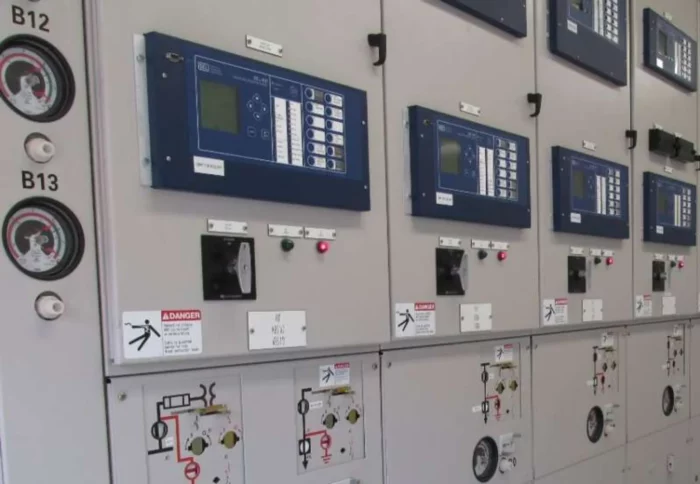
What will the grid of the future look like? Where are scientists and engineers breaking new ground to push energy efficiency even further? Join TRC at ACEEE Summer Study to find out.
TRC examines the Department of Interior’s recent announcement that it will no longer prosecute incidental impacts to birds under the Migratory Bird Treaty Act.
LOWELL, Mass. – TRC Companies Inc., a leader in engineering, environmental consulting and construction-management services, today released its top predictions for 2018, which include federal and state governments pumping trillions into the nation’s aging infrastructure and utilities building smarter, more balanced grids.
NERC has released a report documenting its findings and recommendations related to reliability risks from utility scale solar generation projects with implications for PRC-024 compliance, as well as generation, interconnection and protection system technologies.
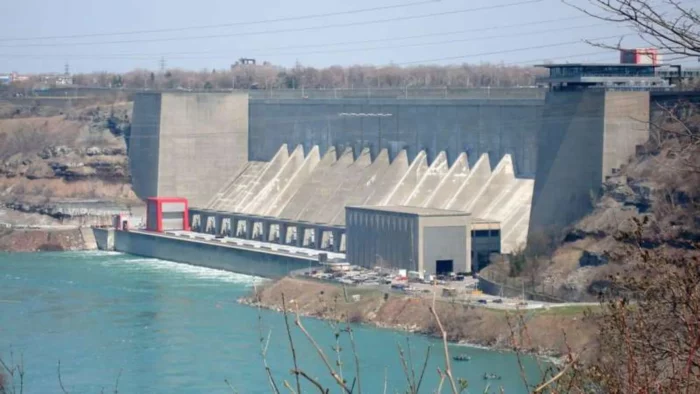
Across the U.S., Department of Energy data show that some 2,200 hydroelectric projects produce more than 6 percent of all the electricity we consume, which amounts to more than one-third of all power generated in 2015 from renewable sources. Operations of many existing hydroelectric projects are governed by 30- to 50-year licenses issued by the…
Growth in solar power creates challenges for both project proponents and utilities. TRC has reviewed hundreds of interconnection applications for utility partners, and we’ve learned important strategies for reducing the time and costs associated with interconnecting projects 1 megawatt or greater.
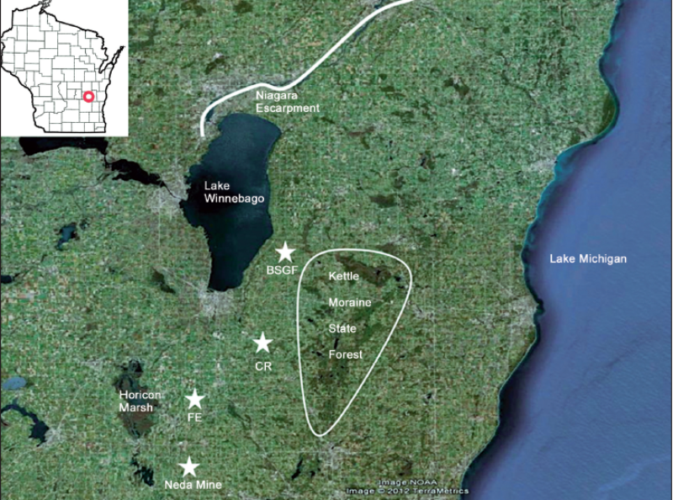
TRC Companies has teamed with BQ Energy to develop the PatterSun solar installation, a project received a 2015 Chairman’s Award from The Business Council of New York.
Wind energy has been the fastest-growing renewable energy source in the world. Studies have estimated bat fatalities at wind facilities, but direct comparisons of results is difficult and can be misleading due to numerous differences in protocols and methods used. We had a unique opportunity to compare fatality estimates from three wind facilities in southeastern