




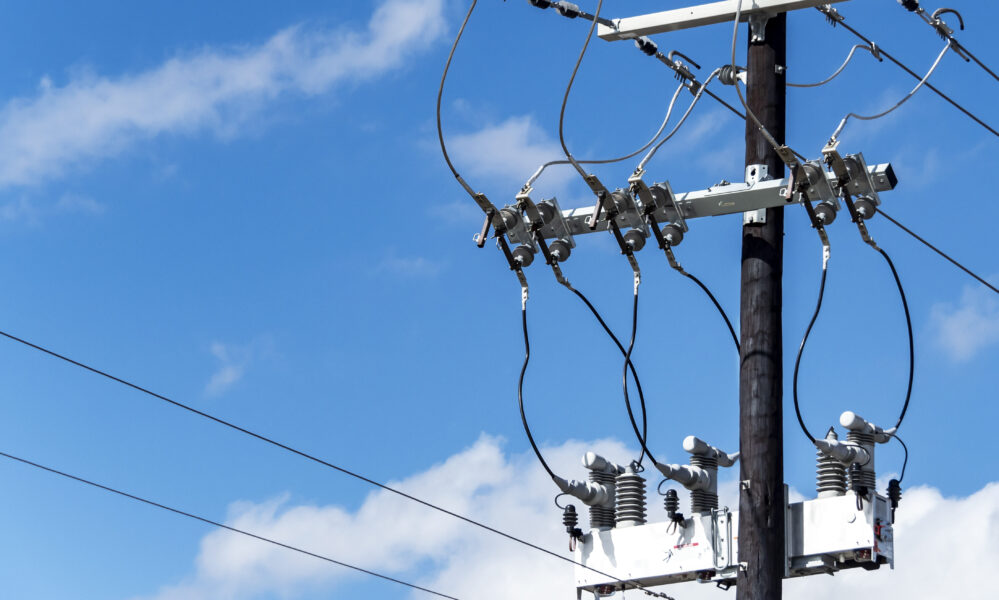

Fault Location, Isolation and Service Restoration (FLISR) is one of the most effective reliability investments available to distribution utilities. The results are well documented. In a U.S. Department of Energy study of 266 FLISR events across five utilities, automated fault response reduced the number of customers interrupted by up to 45% and cut customer minutes of interruption by up to 51% per event. In states where SAIDI and SAIFI performance is tied to financial incentives or performance-based rates, those numbers translate directly into earnings. And because FLISR extracts more reliability from existing infrastructure, it delivers that improvement without rebuilding feeders. The difference between a fault interrupting 2,000 customers and 200 often comes down to segmentation and how quickly healthy sections are restored.
So why do FLISR programs underperform? It’s rarely because the technology fails. They stall because the program is designed around devices instead of around how the distribution system actually operates, especially when conditions are anything but normal. Four decisions made early in program development determine whether FLISR scales into a systemwide reliability strategy or stays a pilot that never reaches full potential.
Related Services
1. Successful Deployment Starts Small, Proves the Model, Then Scales
Successful deployments start with piloting FLISR technology in a stair-step rollout rather than designing a full-scale deployment up front. Design a pilot with a few demonstration circuits in a single FLISR scheme that includes engineering, operations and protection specialist input. Piloting FLISR in real-time builds the lessons learned and enable a repeatable design needed to develop a large-scale deployment plan. Connect teams later, once the foundation is proven. Pilot projects help a utility understand how FLISR interacts with existing protection schemes, switching practices and IT systems before those interactions multiply across the system and early wins build the internal confidence that funds expansion.
2. Select Circuits for Reliability Impact, Not Convenience
Not every feeder returns the same value when automated. Circuit selection should leverage historical outage data, customer counts and feeder configuration, then target the circuits that contribute most to reliability: high customer density, frequent interruptions, sensitive customers and large outage footprints. Focusing on mainline circuit outages and starting with the worst-performing feeders ties automation investment to measurable reliability improvement, which matters when every capital dollar is under scrutiny. It also produces visible early results that turn a pilot into a program.
3. Treat Communications as Distribution Design, Not an Add-On
FLISR performance is tightly coupled to communications, and programs run into trouble when they depend on infrastructure the utility does not control. Cellular networks can fail during the same widespread outages FLISR is meant to manage. Radio paths degrade as vegetation grows or terrain conditions change, a real concern given that vegetation is the leading cause of the distribution faults. Feeder topology adds another layer. On bidirectional feeders, field experience shows communications equipment can lose power during reconfiguration if it is fed from only one side of the circuit, even when the switching device itself is built for two-way operation. The fix is straightforward in principle. If a device is expected to operate in looped or backfeed scenarios, its communications and power supply must be engineered for those same conditions. Communications power sources, redundancy and behavior during switching events belong in the distribution design from day one.
4. Plan for Density and Reduce Communication Dependency
FLISR delivers more value as feeders are segmented into optimized zones, because each fault touches fewer customers. But traditional coordination methods put a ceiling on density. As devices are added downstream, protection settings must operate faster until coordination margins disappear and additional automation stops improving reliability. Planning for higher device density from the start keeps that ceiling from arriving early.
While utility engineers should develop protection schemes that optimize zone size and minimize the outage size and impact, sequential reclosing is one approach that addresses density and communications risk at the same time. Reclosers are grouped into zones with shared time-current curve settings; for a fault within a zone, devices trip and reclose sequentially using live-dead voltage detection and definite time delays. Each device operates independently, so the system behaves as designed even when SCADA or network communications are unavailable. The approach supports more reclosers in series, maintains coordination in both directions during tie operations and allows new devices to be added without re-engineering settings as long as protection zones remain unchanged. For utilities scaling past the pilot stage, that combination of density and resilience is what keeps growth from adding fragility.The Takeaway for Distribution Automation Leaders
FLISR is not a device deployment. It is an operations strategy that changes how the distribution system responds to faults, and the programs that deliver lasting SAIDI and SAIFI improvement share the same traits: operator buy-in, start small and scale deliberately, choose circuits based on reliability exposure, engineer communications for abnormal conditions and design for segmentation density before coordination becomes the constraint. Change management, standardization and operational simplicity are what allow a handful of pilot circuits to grow into a systemwide reliability program with measurable return.

Want to Compare Notes on Your FLISR Roadmap?
If you are evaluating FLISR improvements or looking for ways to scale distribution automation without adding fragility, connect with our experts.
