


The surge in large elecricity consumers, like data centers and crypto mining operations, is pushing federal regulators to act faster than ever. Both FERC and NERC are moving in parallel to reshape the rules governing how large loads connect to and operate on the bulk power system.
FERC Actions
At its June 18, 2026, meeting, FERC took an unusual step by issuing Show Cause Orders rather than following the typical Notice of Proposed Rulemaking process. The reason is large load interconnection requests are arriving at a pace and scale that existing tariffs simply weren’t designed to handle. FERC has determined that current RTO and ISO transmission tariffs are no longer just and reasonable as required by the Federal Power Act.
The Show Cause approach is significant because it speeds up the process and shifts the burden of proof onto the RTOs and ISOs to demonstrate how they will fix their tariffs. Since each RTO and ISO is at a different stage of addressing large load issues, each will respond individually on a compressed timeline.
Each RTO and ISO must propose tariff changes in five areas:
- Efficient Study Processes: Developing efficient transmission service application and study processes, including consideration of alternative transmission technologies.
- Cost Transparency: Preventing cost shifting and requiring transparency regarding transmission costs.
- Co-Location Rules: Accommodating co-location arrangements and behind the meter generation.
- Flexible Load Service: Providing new transmission services for flexible large loads.
- Generation Studies: Developing a process to study generating facilities serving electrically proximate large loads and large co-located loads.
FERC has directed utilities outside RTO/ISO service territories to submit any proposed large load related tariff changes through the existing ANOPR proceeding.
Related Services
NERC Response
In parallel, NERC is developing mandatory reliability standards specifically for large loads, starting with what it calls “Computational Load,” data centers and crypto mining. NERC’s position is that reliable bulk power system operation requires these entities to be formally registered and subject to enforceable standards.
NERC is initially proposing a 20 MW threshold to define a “large” computational load. This level was chosen because it captures the entities most likely to cause problematic dynamic behavior when connected at bulk power system voltage levels. A concern NERC says, is supported by an increasing number of observed grid events emanating from large load operating practices.
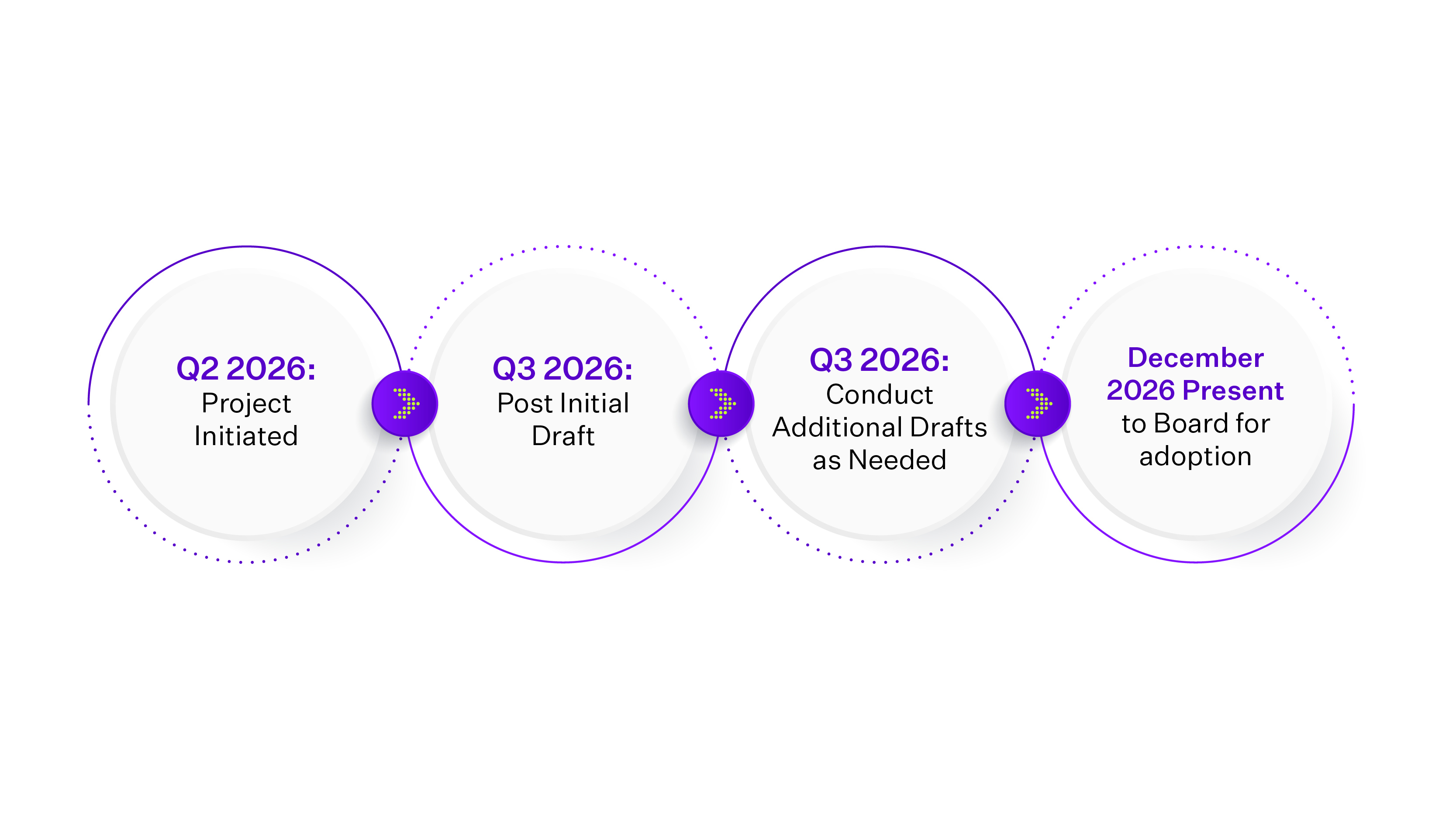
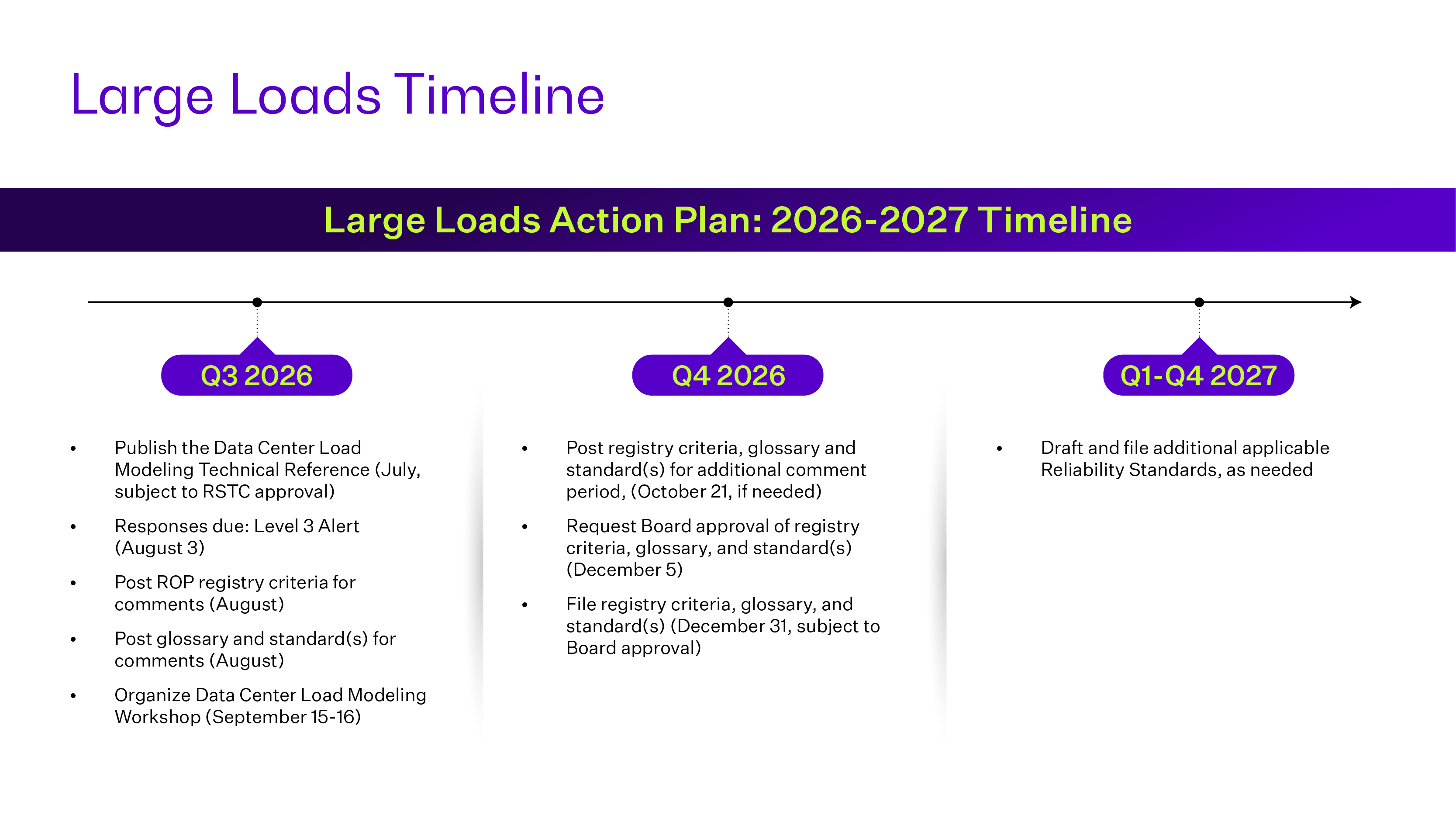
At its June 17, 2026 Board of Trustees meeting, NERC presented two timelines: one for standards development and one for updating its Rules of Procedure to enable registration of Computational Load Entities (CLEs). Both tracks are expected to produce concrete outcomes before the end of 2026.
What This Means: TRC Can Help
The regulatory foundation for large load interconnection is being rebuilt quickly. Utilities should closely track FERC and NERC developments as they unfold and assess how the changes affect their interconnection processes, system planning and compliance programs, particularly as mandatory NERC standards that address reliability risk related to large loads come into view. To this end, TRC possesses the regulatory expertise to assist your company with the revision of your FAC-001 (Transmission Interconnection Requirements) policies to take into account these new large loads seeking to interconnect to your bulk power system. Simultaneously, our experts can facilitate discussions with your RTO or ISO regarding FAC-002, Facility Interconnection Studies guidelines. With a close understanding of the frequent changes over the past 12 to 18 months, TRC as your trusted partner can readily integrate these into overall interconnection studies until such a time that the NERC standards can catch up, like the new EOP-012 NERC standard addressing extreme cold weather concerns.
TRC can help your team navigate this evolving landscape, from system studies and project design to NERC compliance support. Our power system planning approach integrates regulatory requirements, industry standards, and operational goals with practical, cost-effective solutions. Our experience with public and private sector utility clients is a testament to our understanding of your NERC compliance obligations as it relates to aspects of your business. We apply advanced technology solutions to help clients navigate a rapidly evolving regulatory landscape with confidence.
Resources
 FERC Launches Aggressive Targeted Action to Speed Large Load Integration
 FERC Launches Aggressive Targeted Action to Speed Large Load Integration
 June 2026

FERC: Presentation | Items E-7 through E-12: RTO/ISO Show Cause Orders
June 2026
NERC: Large Loads Action Plan Initiative
June 2026
NERC Standards Development Project 2026-02-Computational Loads
February 2026
NERC Large Load Proposed Changes to Rules of Procedure-Large Load Registration
April 2026
NERC Technical Reasoning – Proposed Computational Load Entity
April 2026
NERC Standard CIP-002-5.1a – Cyber Security – BES Cyber System Categorization
June 2026
NERC Standard CIP-014-3 – Physical Security
June 2026
NERC Standard FAC-001-4 – Facility Interconnection Requirements
June 2026
NERC Standard FAC-002-4 – Facility Interconnections Studies
June 2026
TRC Power System Studies Support
September 2024
About TRC’s NERC Compliance Practice
Our experts help you stay ahead of regulatory changes by designing programs aligned with financial, technical, scheduling and compliance goals. Our power system experts help you stay ahead of changing regulatory expectations because they stay engaged with the regulatory process and know how to plan, design and install programs that address your financial, technical and scheduling goals including compliance with changing NERC standards and Guidelines as well as industry “best practices” and the latest technology developments.
This regulatory update is a service to TRC’s utility clients, helping keep you informed of issues that increase your company’s business and compliance risks along with related topics regarding future regulatory developments to help you achieve your company’s business goals.
Adapt to
Change
Partner With TRC’s Tested Practitioners
Sharing Our Perspectives
Our practitioners share their insights and perspectives on the trends and challenges shaping the market.

NERC Issues Large Load Guidance in Response to Alert Findings
June 23, 2026
NERC’s new Large Load Guideline and Level 3 Alert raise the stakes for interconnection. Here’s what utilities need to know and do next.

NERC’s Large Load White Paper in 5 Minutes: Gaps, Findings, and Next Steps
May 12, 2026
NERC’s latest white paper identifies critical gaps in how the grid plans for, connects, and operates alongside large loads.