





Challenge
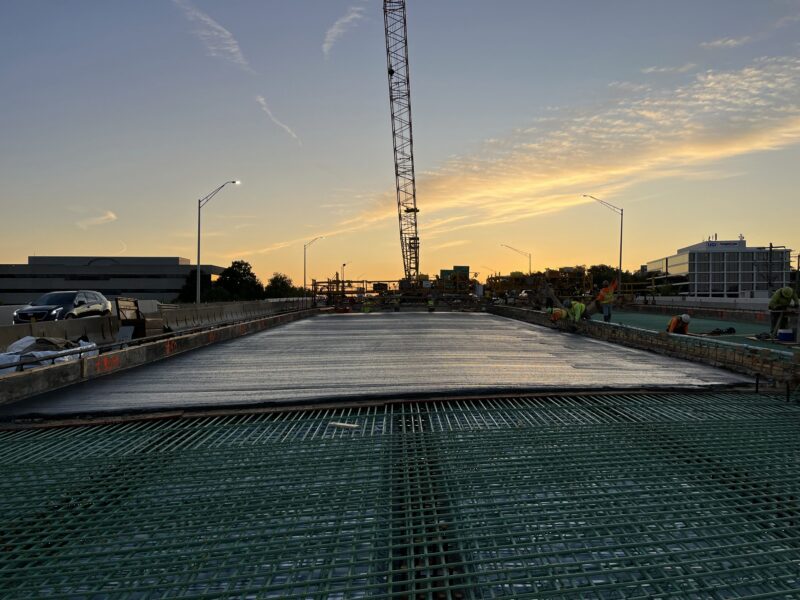
The Pennsylvania Turnpike Commission (PTC) undertook a major infrastructure improvement project along Milepost 324.65 to Milepost 326.18 in Chester and Montgomery Counties, Pennsylvania. The project involved staged, full-depth roadway reconstruction to expand the corridor from two lanes to three lanes in each direction, along with the replacement of three mainline bridges in a high-traffic area.
The primary objective was to relieve persistent congestion on one of the Turnpike’s busiest stretches while maintaining traffic flow during construction. The project faced multiple challenges including complex traffic control requirements, aggressive schedules, variable weather conditions and heightened public sensitivity due to daily commuter impacts. Environmental compliance was also critical, requiring consistent on-site oversight to meet PTC standards and regulatory expectations.

Solution
TRC supported the project by providing experienced, on-site environmental inspection services tailored to PTC’s standards and construction practices. An environmental inspector with direct knowledge of the PTC’s requirements was embedded on-site to support day-to-day construction activities.
TRC’s familiarity with PTC’s DIRT App, enabled efficient documentation, reporting and issue tracking aligned with the client’s internal systems. This ensured consistent environmental compliance across all phases of construction, supported rapid communication with project teams and minimized delays tied to environmental controls.
TRC’s field presence helped proactively identify and address environmental concerns as construction progressed, supporting safe, compliant execution despite schedule pressure and changing site conditions.
Results
The project contributed to meaningful congestion relief along a critical segment of the Pennsylvania Turnpike, improving traffic flow and overall roadway safety for commuters and freight traffic.
Beyond mobility improvements, the project delivered lasting community and environmental value through enhanced safety, improved structural integrity of the new bridges and the installation of environmental controls including sediment basins, retaining walls and sound barriers. These measures helped protect surrounding areas while supporting long-term infrastructure resilience.
TRC’s involvement strengthened environmental compliance, reduced risk during construction and supported successful delivery of a complex, high-visibility transportation project in a demanding operational environment.