




No. Microplastics are solid plastic particles, while PFAS are a family of synthetic chemicals. However, since both are prevalent and can be persistent, they may co-occur in the environment.
Microplastics and per- and polyfluoroalkyl substances (PFAS) are two of the most persistent and widely discussed contaminants found in the environment today. Their presence has drawn the attention of local communities, businesses and international regulatory bodies.
Understanding the difference between microplastics and PFAS is crucial for all stakeholders. This article examines both substances, their interactions and the practical steps organizations can take to address emerging risks and adapt to evolving regulations.
What Are Microplastics?
Microplastics are tiny plastic particles between 1 nanometer and 5 millimeters. They originate from two main source categories:
- Primary microplastics: Intentionally manufactured small particles, like microbeads in cosmetics and industrial abrasives.
- Secondary microplastics: Plastic particles that are a result of the breakdown of larger plastic items, such as bottles, bags and synthetic textiles, due to exposure to the natural elements or physical abrasion.
These particles have been detected in water bodies, soil, air, food and drinking water. Studies have shown that they are capable of traveling long distances, carried by water currents, wind, weather events and other atmospheric processes, allowing them to accumulate in remote regions like the Arctic and deep ocean trenches.
Polyethylene, polypropylene, polystyrene and polyvinyl chloride are among the most common microplastic polymers. These particles are highly resistant to degradation, persisting in the environment for decades.
The combination of widespread presence and persistence means that exposure to microplastics is nearly unavoidable. This has led to public interest in their potential health implications; however, evidence from toxicological and human epidemiological studies is limited and inconclusive.
Related Services
What Are PFAS?
The PFAS family includes thousands of man-made chemicals that possess water-, grease- and stain-resistant properties. Because of these properties, PFAS are used for a wide range of consumer and industrial products, including nonstick cookware, water-repellent clothing, food packaging and firefighting foams.
These chemicals have been referred to as persistent because their carbon-fluorine bonds are among the strongest in chemistry, making them extremely resistant to degradation. They can travel long distances in air and water, entering environments far from their original source. They can leach from landfills, migrate through groundwater and persist in surface waters, making them difficult to contain.
Certain long-chain PFAS (many of which are no longer produced in the United States) can build up in the bodies of living organisms, including humans, over time — a process known as bioaccumulation.
What Are the Similarities Between Microplastics and PFAS?
Microplastics and PFAS are not the same, but both can be persistent and bioaccumulative, requiring specific treatment technology to remove them from the environment. These characteristics present remediation challenges for treating contaminated environments.
Both substances are man-made or the result of man-made processes. Both describe large categories of chemicals and substances, making it impractical to assign specific characteristics to each group. Microplastics and PFAS are both commonly discussed in the public press as being associated with a myriad of health effects, although findings are often equivocal and influenced by confounding bias.
What Are the Differences Between Microplastics and PFAS?
A few of the main differences between microplastics and PFAS include:
- Physical form: Microplastics are solid particles. PFAS are chemicals that can exist in solid, liquid or gaseous forms.
- Sources: Microplastics come from a wide range of sources, like plastic debris, microbeads and synthetic fibers. PFAS are also released from a wide range of sources, including industrial processes, consumer products and firefighting foams like synthetic aqueous film-forming foam.
- Regulations: Some microplastics-containing products are subject to bans, but there are few other regulations. PFAS are being regulated in drinking water, food packaging, consumer products (at the state level) and industrial discharges.
- Persistence: Both are highly persistent, but the environmental persistence properties of PFAS have been documented for at least 25 years, whereas the science on microplastics is relatively new.
How Do Microplastics and PFAS Affect Health and Ecosystems?
Microplastics represent a heterogenous class of particles that vary by polymer, size, shape and additive chemicals that may present toxicity through different modes of action, such as particle-size effect and chemical-mediated effects in both animal and in-vitro studies. Accordingly, general causation for some mechanistic endpoints is primarily supported by non-human evidence, while specific causation in humans requires quantification of exposure, biological dose and temporal relationship.
While multiple studies claim to report adverse health effects of PFAS exposure at some doses, establishing definitive human exposure thresholds that clearly correlate with health outcomes remains challenging. For example, scientists and regulators have raised concerns that certain PFAS chemicals may contribute to a range of health effects at some exposure levels. Some studies claim to link specific PFAS to thyroid disruption, cardiovascular issues, reproductive impacts, reduced vaccine response, developmental effects and liver toxicity. A small number of PFAS compounds are classified as possible or probable human carcinogens. However, it’s essential to reiterate that the PFAS family comprises thousands of different chemicals with a vast range of chemical structures, physical properties and toxicological profiles, all of which influence the potential health effects of a single compound.
Adding to the complexity, researchers have not identified a single biological mechanism—or “mode of action”—that explains all of the diverse health effects attributed to PFAS. This lack of a unifying explanation highlights just how broad and varied this chemical class is, and why it is nearly impossible to attribute specific health effects to PFAS.

How Do Microplastics and PFAS Enter the Body?
Microplastics and PFAS are widespread and can enter the body through multiple routes:
- Ingestion: The most common pathway into the body for both microplastics and PFAS is by eating and drinking. Microplastics are found in packaged food products, seafood, drinking water, table salt and even some fruits and vegetables. Trace levels of PFAS can be found in drinking water, accumulate in fish and meat and migrate from food packaging into food. PFAS are known to cross the placenta and have been found in breast milk.
- Inhalation: Airborne microplastics can be inhaled and deposited in the lungs after being released from sources like synthetic textiles, tire wear and dust. PFAS can also be present in indoor air and dust, especially in homes with stain-resistant carpets or treated furniture.
What Regulations Apply to PFAS and Microplastics?
The U.S. government banned microbeads in rinse-off cosmetics in 2015, and several states have enacted additional restrictions on single-use plastics and microplastics in products. States like Michigan, New Jersey and California set their own PFAS limits for drinking water and are pursuing aggressive cleanup and monitoring programs. Maine and Minnesota have established regulations that prohibit intentionally added PFAS in many consumer products, unless approved through special use appeals.
In the European Union, microbeads in cosmetics are banned, and broader restrictions on intentionally added microplastics in products are being implemented. The EU has also been increasing restrictions on PFAS in most uses.
In the U.S., the Environmental Protection Agency (EPA) has established a plan to regulate PFAS, including setting drinking water standards, requiring reporting of PFAS releases and funding cleanup efforts. While some of these regulations have been repealed and will be reevaluated, certain PFAS, such as PFOA and PFOS, remain designated as Comprehensive Environmental Response, Compensation and Liability Act (CERCLA) Hazardous Substances.
What EHS&S Strategies Can Organizations Use to Manage Microplastics and PFAS?
Organizations can take several practical EHS&S steps to manage the risks of microplastics and PFAS:
- Product stewardship and supplier audits: Work with suppliers to identify sources of microplastics and PFAS in raw materials and finished goods. This includes requesting detailed information on the chemical composition of materials and conducting on-site assessments of manufacturing processes.
- Source control: Evaluate the supply chain to identify PFAS and possible chemical alternatives. For critical PFAS in which no chemical alternatives exist, work with regulators to discuss product stewardship initiatives and methods to continue use while minimizing environmental and human exposure.
- Engineering controls: Upgrade water and wastewater treatment systems with filtration technologies, like activated carbon, reverse osmosis and ion exchange, to improve contaminant removal. Implementing closed-loop systems can also minimize the discharge of contaminated water.
- Innovative detection: Use AI-powered sensors, high-resolution analytical methods and other tools to detect microplastics and PFAS at trace levels in environmental samples.
- Remediation methods: Explore new approaches such as in situ foam fractionation for removing PFAS and filtration/adsorption and electrocoagulation for removing microplastics. Researching and piloting these methods can lead to more effective and sustainable remediation strategies.
- Waste management: Implement best practices for plastic recycling, landfill management and hazardous waste disposal to minimize environmental releases. This includes proper sorting and segregation of waste streams, as well as investing in advanced recycling technologies.
- Stakeholder engagement: Communicate with regulators, customers, and communities about risks, monitoring results, and mitigation efforts. Participate in industry groups and research initiatives to share knowledge and drive innovation.
What Are Other Emerging Contaminants?
Microplastics and PFAS are part of a broader class of emerging synthetic contaminants that also includes phthalates and bisphenol A (BPA). These chemicals are often used in plastics and consumer products, and like microplastics and PFAS, they can contaminate air, water, dust and food.
Phthalates and BPA have been speculated to impact hormonal health, although further research is needed to fully characterize the impacts of these chemicals on human and environmental health.
Successful EHS&S management must consider the full spectrum of emerging contaminants, their sources, and their interactions to protect consumers and organizations while contributing to a cleaner, safer future.
Frequently Asked Questions
Do you have further questions about microplastics and PFAS? Learn more:
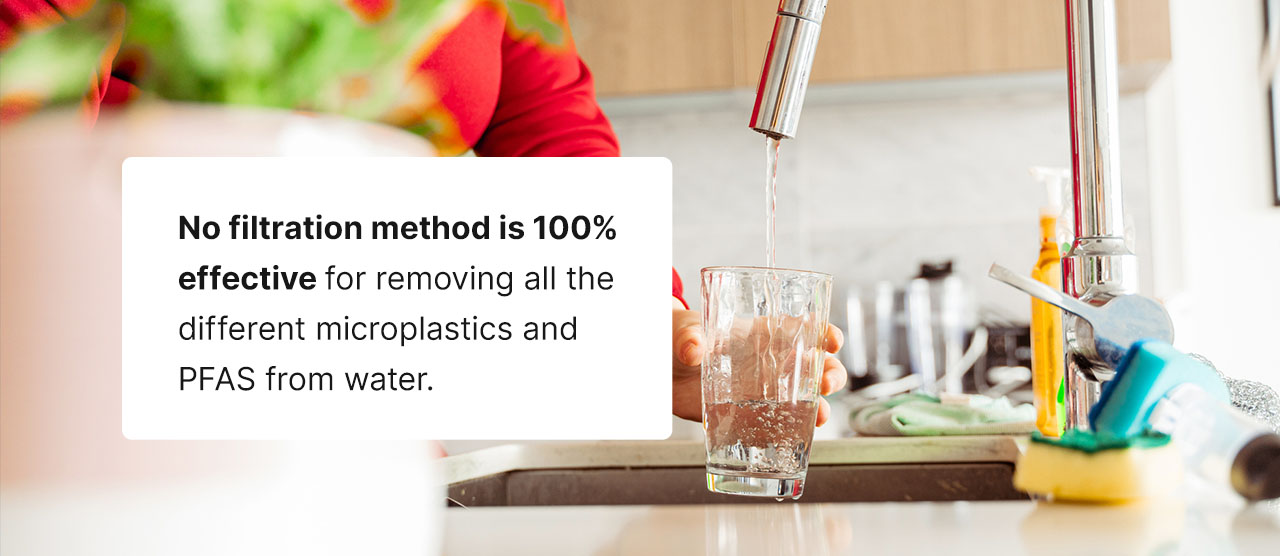
Most home water filters, including those with activated carbon and reverse osmosis systems, can remove a significant portion of microplastics, although not all. Advanced filtration methods like activated carbon, reverse osmosis and ion exchange are effective for some PFAS, but not all. No filtration method is 100% effective in removing types of microplastics and PFAS from water, although many advanced filtration systems can remove these contaminants down to the parts per trillion (ppt) level.
Industries such as plastics, textiles and electronics manufacturing, food processing, waste management, firefighting, construction and transportation are most at risk due to their use of PFAS-treated materials and the potential for microplastic release.
If your organization operates in any of these industries, contact an expert consultant to understand and manage your contamination risks and mitigate potential liabilities.
Trust TRC for Science-Backed Solutions to Manage Emerging Contaminants
Microplastics and PFAS present distinct environmental and human health risks. Their persistence, alleged health risks and regulatory scrutiny make them a top concern for EHS&S professionals, businesses, consumers and regulators.
By understanding these contaminants and how to manage them, organizations can protect their people, reputation and bottom line. But as research and regulations evolve, organizations need forward-thinking expertise and the adaptability to navigate emerging challenges.
TRC is a multidisciplinary consulting partner. We deliver data-driven insights and actionable strategies for risk management, exposure assessment and regulatory compliance.
Our Strategic Health Sciences team provides advanced exposure modeling, toxicology, epidemiology, and product stewardship support to help clients minimize liability, safeguard communities and make informed choices.
Get Started Today
TRC represents adaptability and expertise that safeguard our clients as regulations change. Contact us today to utilize TRC’s proven practitioners and manage health risks with science-based solutions.